Support agency, not an aging label.
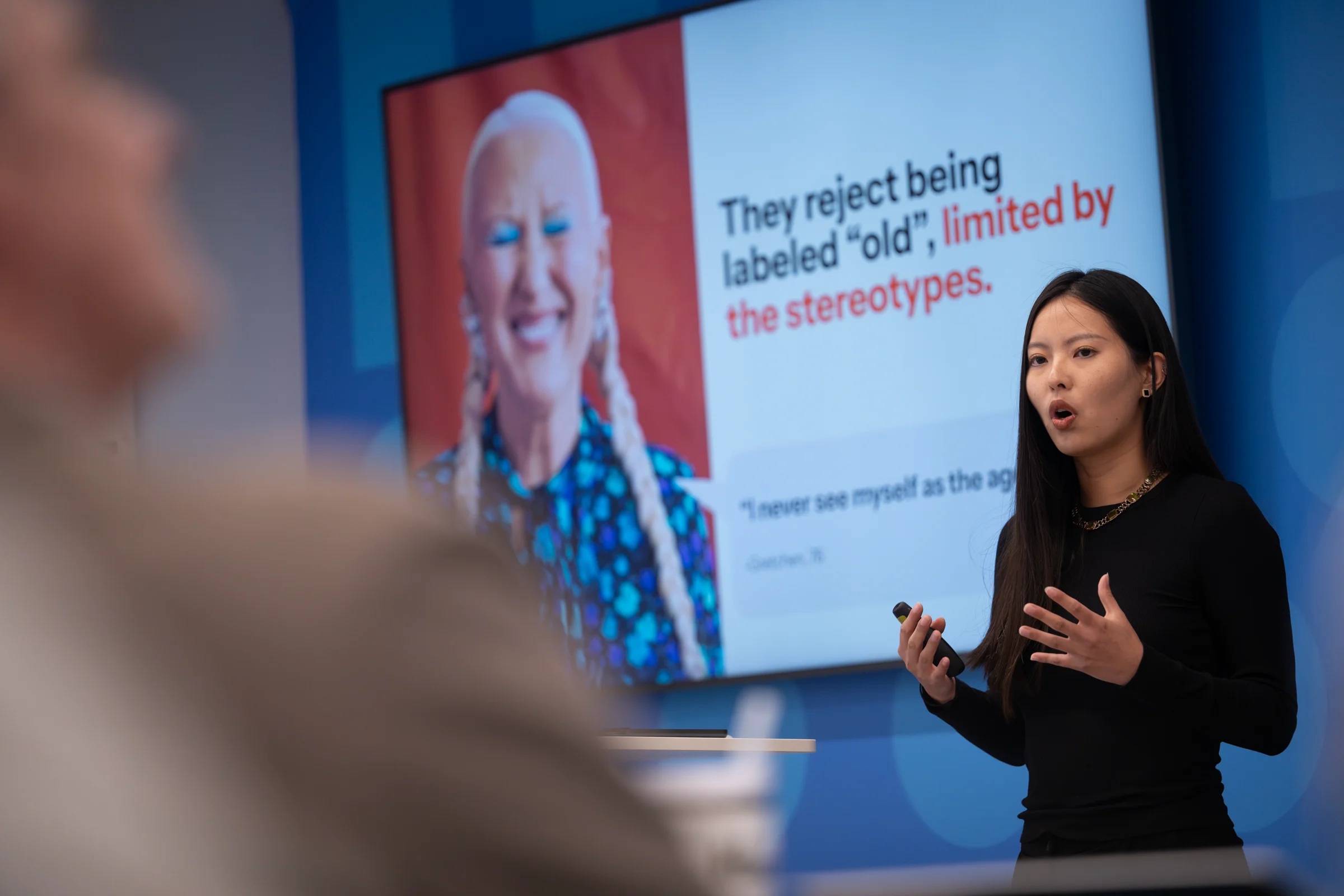
Participants welcomed useful assistance but resisted services framed as caregiving or diminished capability.
Design implicationMake support feel universal, optional, and self-directed.
Amazon-sponsored Integrated Product Development capstone · 2026
Recently retired adults were exploring new rhythms and identities, while the services around them remained transactional, effort-heavy, or framed around dependency.
How might we support people transitioning from active to conscious aging to enrich exploration through light connections?
In-depth interviews and contextual inquiry revealed that the important shift was not age itself, but changing identity, routine, energy, and sources of belonging.
Participants welcomed useful assistance but resisted services framed as caregiving or diminished capability.
New hobbies helped people test future identities and rebuild purpose. They were not simply a way to fill free time.
Brief interactions around errands, pickup points, and familiar places provided rhythm, visibility, and belonging.
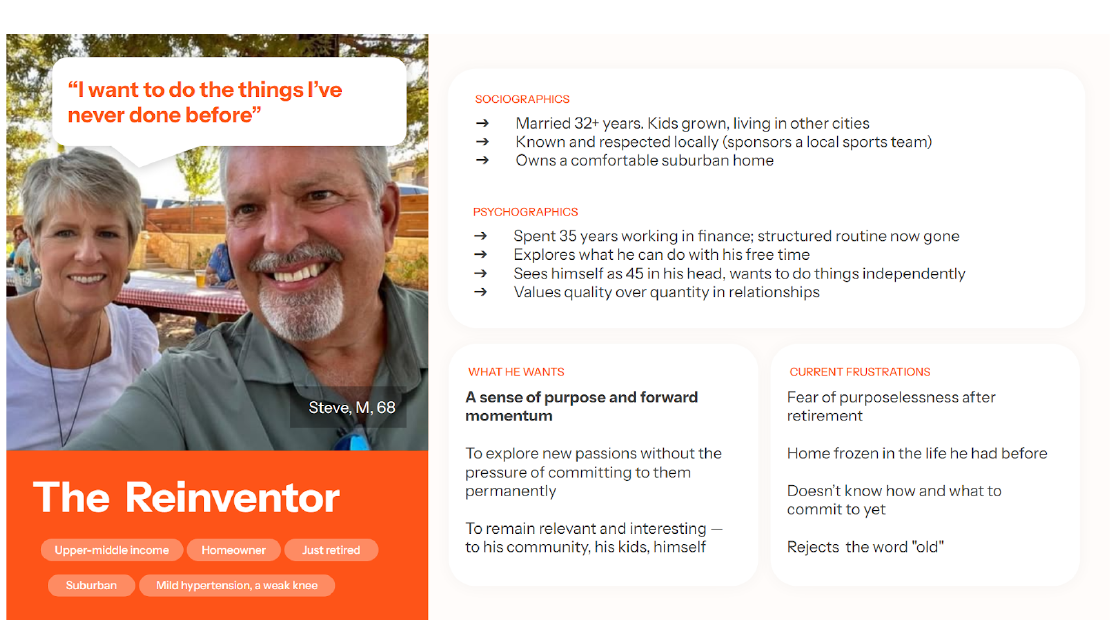
Recently retired, independent, curious, and seeking purpose without permanent commitment.
I conducted the user research that steered our direction toward low-pressure hobby exploration and light social connection. As project manager, I kept the five-person team aligned through faculty reviews, Amazon sponsor touchpoints, and internal and external working sessions.

The team translated research into emotional outcomes, product requirements, and concrete Amazon touchpoints.
“I feel curious”
Ready-to-start kits · No setup required
“I feel accomplished”
Step-by-step guidance · Clear progression
“I feel connected”
See others’ experiences · Passive interaction
“I feel fulfilled”
Structured short activities · Keep mind engaged
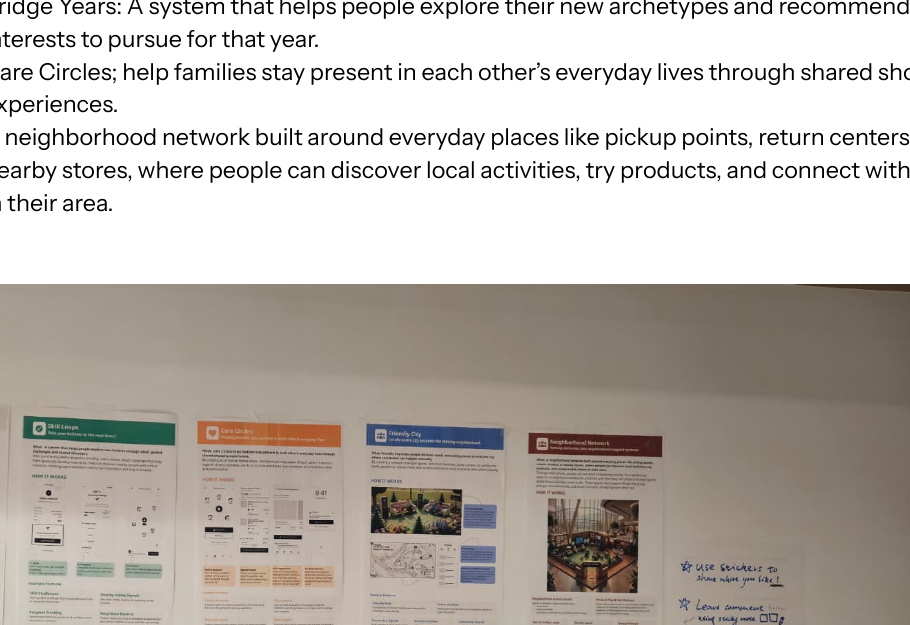
The team made early concepts tangible and tested them with 15 users. Competitive and task-based mechanics felt unnecessary or overwhelming.
DecisionMove toward a value-driven experience built around low-friction exploration, emotional relevance, and community support.
I produced this film to communicate the proposed physical-to-digital Curio experience: a tailored kit, a confident beginning, and continued discovery beyond delivery.
This film shows the proposed experience. Amazon did not launch it as a product.
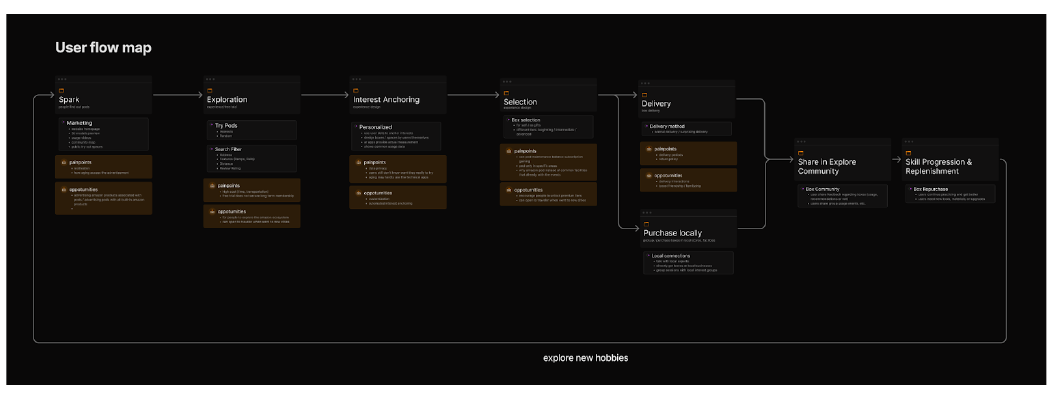
The concept follows a Curio hobby kit from delivery into guided learning and continued discovery across the proposed physical and digital service.
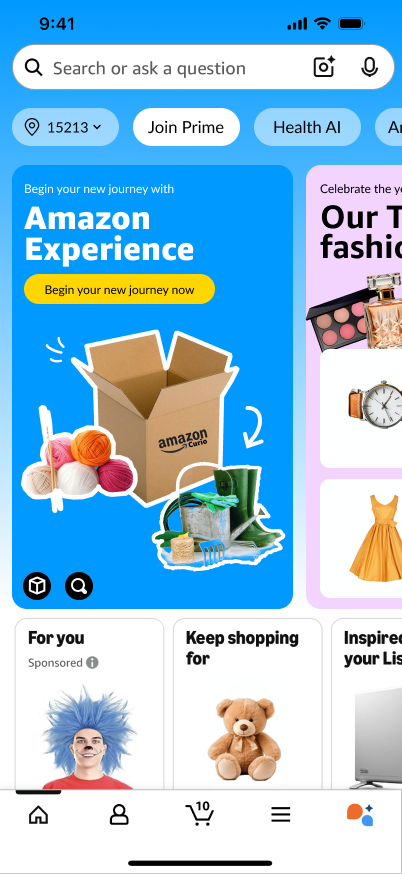
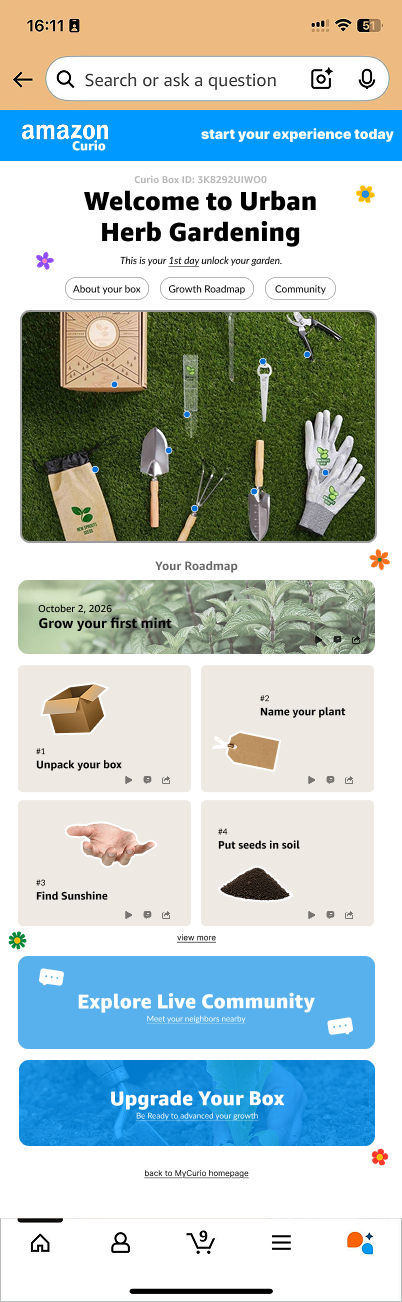
Amazon Curio is a proposed Amazon-native experience that packages a hobby as a confidence-building starting point: low-commitment Try Pods and pilot pop-ups, a curated kit, guided learning, and access to nearby experts and hobby communities.
My contribution With two other UX designers, I co-created the service design connecting discovery, curated kits, guided learning, and light community participation.
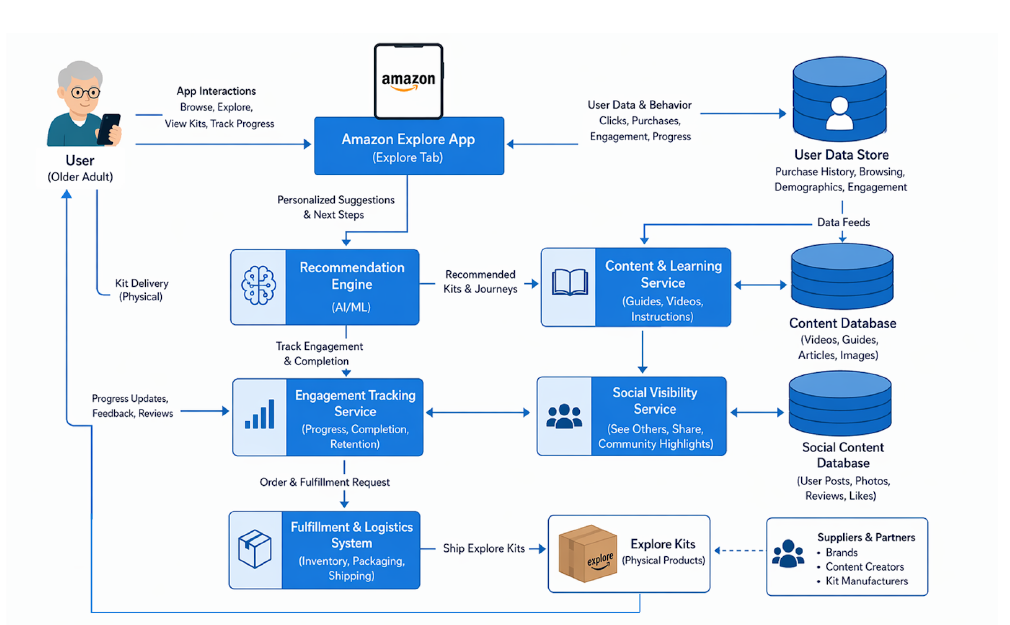
The proposal used existing Amazon capabilities where possible, connecting commerce, content, recommendations, social visibility, and fulfillment around the Explore Kit.
Curated Explore Kits delivered through Amazon fulfillment.
An Experiences layer inside familiar Amazon mobile and web surfaces.
Personalized hobbies and next steps shaped by interest and engagement signals.
Community examples, local experts, and passive recognition.
Inventory, packaging, delivery, feedback, and replenishment.
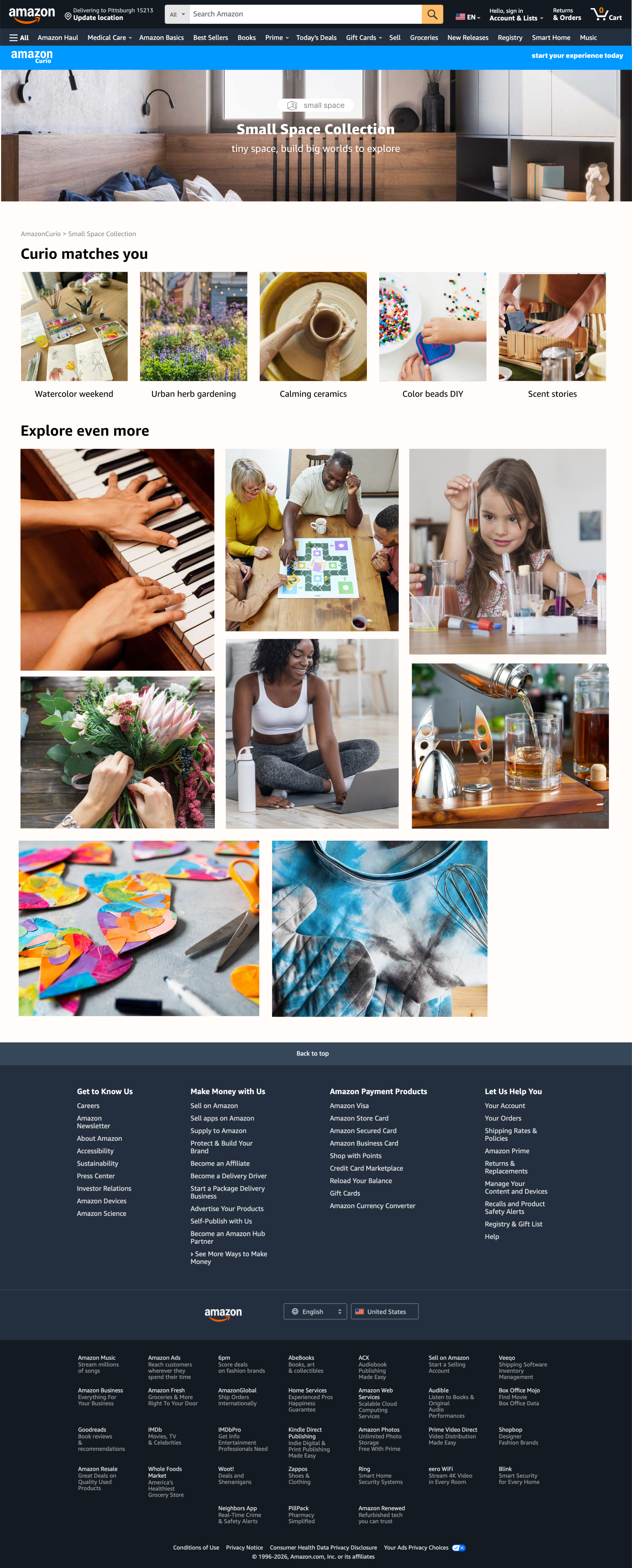
The prototype spans Amazon mobile and web. Open any framed page, then scroll inside it to inspect the complete design.
Curio enters through familiar Amazon surfaces, then opens a collection built around interests rather than individual products.
The Curio detail page turns interest and experience level into a tailored kit, learning path, community evidence, and replenishment plan.
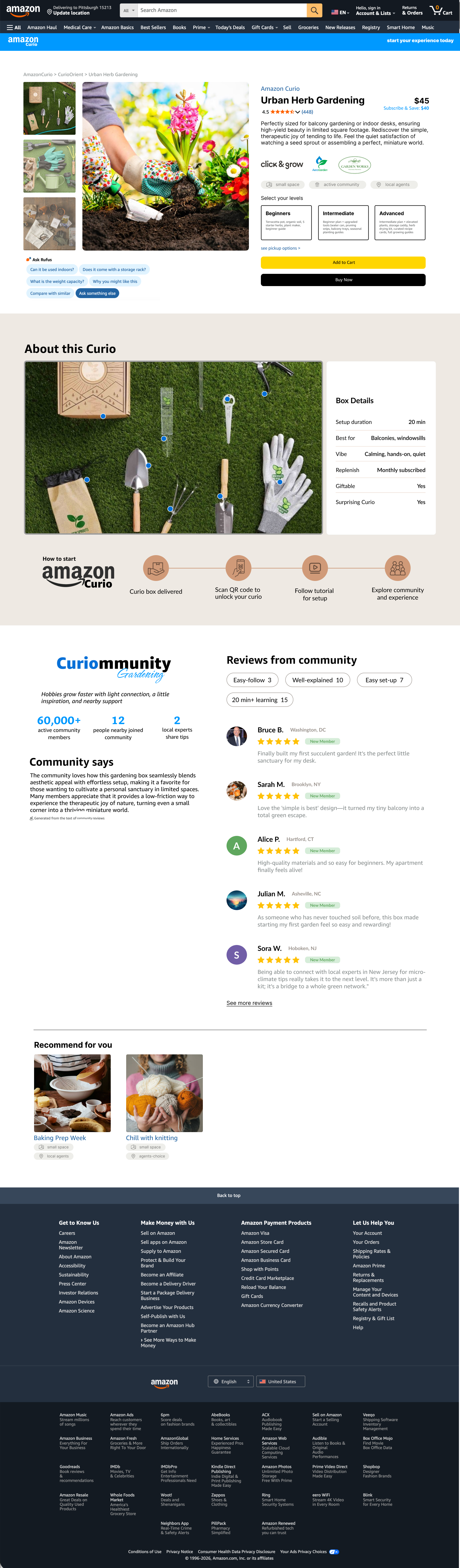
Tutorials, AI assistance, community reviews, nearby experts, and lightweight posting help users continue after unboxing.
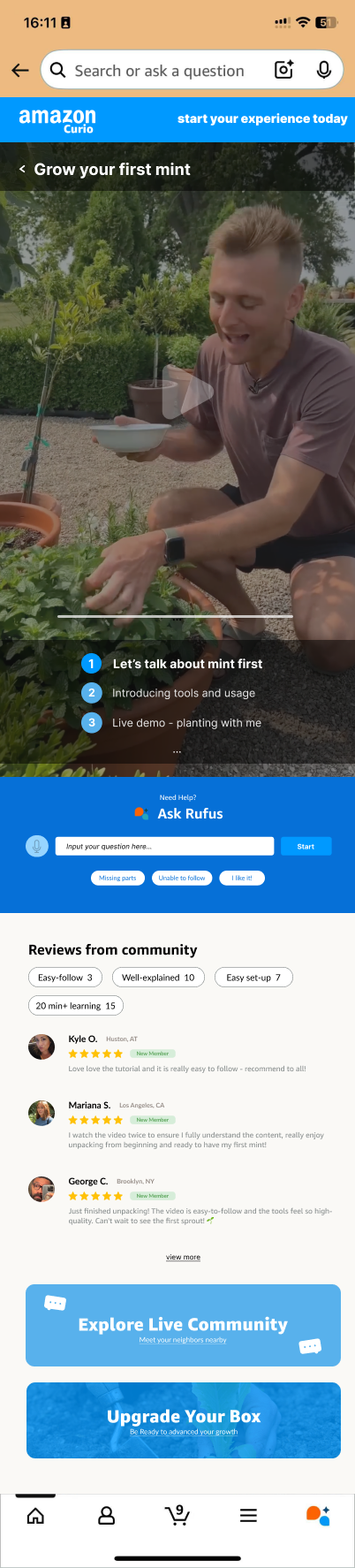
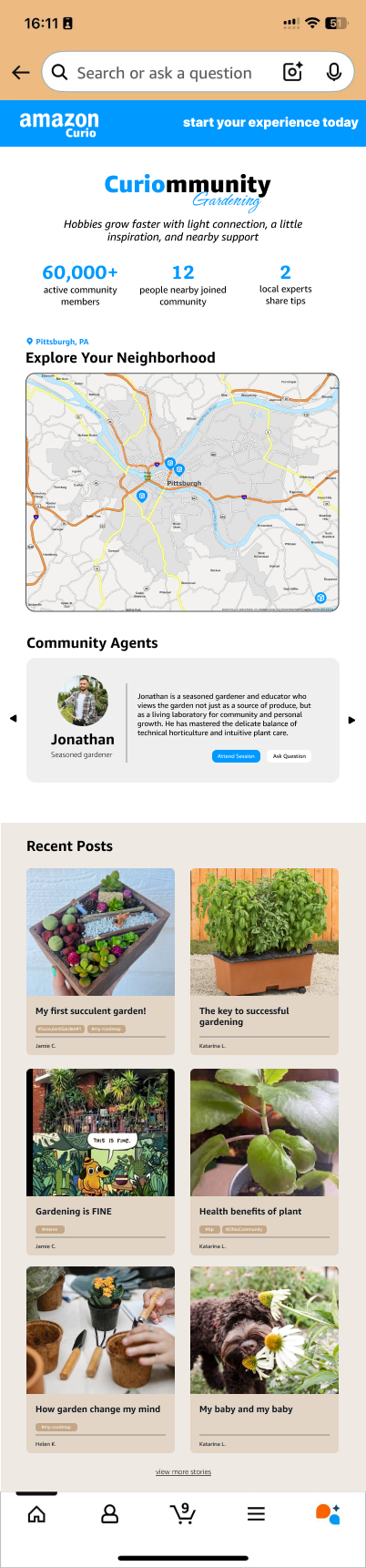
The business case proposed recurring engagement through kits, consumables, and progression. The figures below come from the report’s market estimates; they are not measured product impact.
Curated hobby experiences among Amazon Prime users aged 60–80.
The report’s proposed reachable serviceable market.
The report’s initial obtainable-market estimate.
Structured exploration · reduced friction · ongoing guidance · social reinforcement
More frequent engagement · repeat consumables · deeper integration into daily life
A hybrid concept spanning mobile and web interfaces, physical Explore Kits, recommendations, learning, community, fulfillment, and a phased business proposal.
Primary research, contextual inquiry, competitive analysis, ecosystem mapping, and qualitative concept testing with 15 participants.
Adoption, first-project completion, repeat engagement, community participation, operating consistency, and the proposed market model.
This was an Amazon-sponsored academic concept proposal. Research and qualitative concept testing informed the direction; the proposed service, business model, and future success measures were not launched or validated in market.