Find
Make unfamiliar knowledge easier to approach.
Personal concept · 2 months · UX/UI & conversation design

A voice-first wearable concept that pairs timely guidance on smart glasses with a phone companion for images, ingredients, and detail.
Speculative concept · Educational guidance only · Not medically validated
 Listening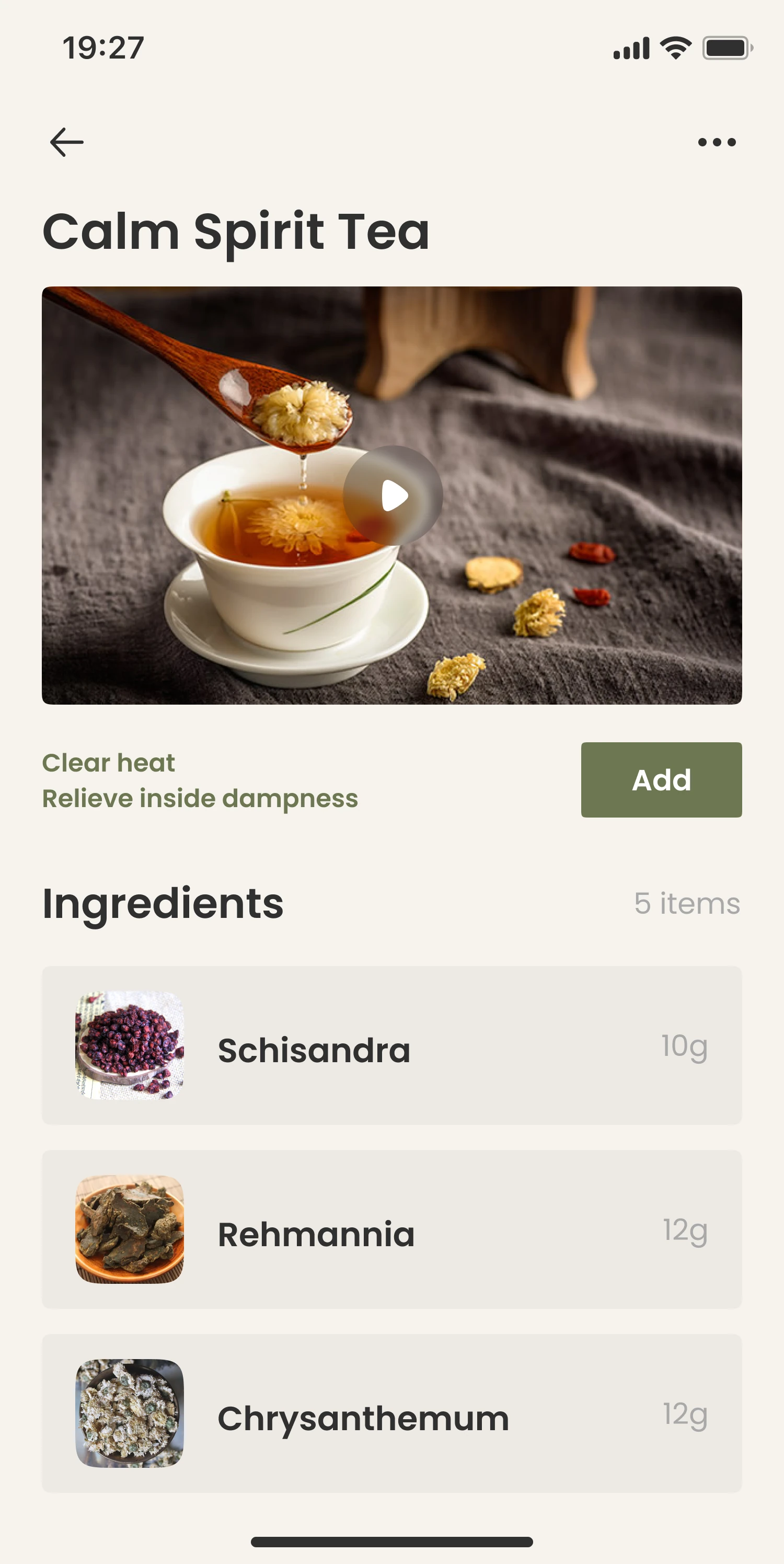
The opportunity
Information can become fragmented between learning what an ingredient is, deciding whether it feels relevant, finding it, preparing it, and remembering what to do next. I used that broader journey to frame the concept and its boundaries.

How might a future wearable make herbal-tea knowledge easier to understand while preserving context, care, and user control?
Make unfamiliar knowledge easier to approach.
Help someone judge what feels relevant without hiding uncertainty.
Connect recognition with a practical way to find ingredients.
Keep instructions available while both hands are busy.
Carry the routine into the rest of the day.
Leave the person with knowledge they can use again.
Designed personas
These are scenario models created to explore different needs. They are not presented as research-validated personas.
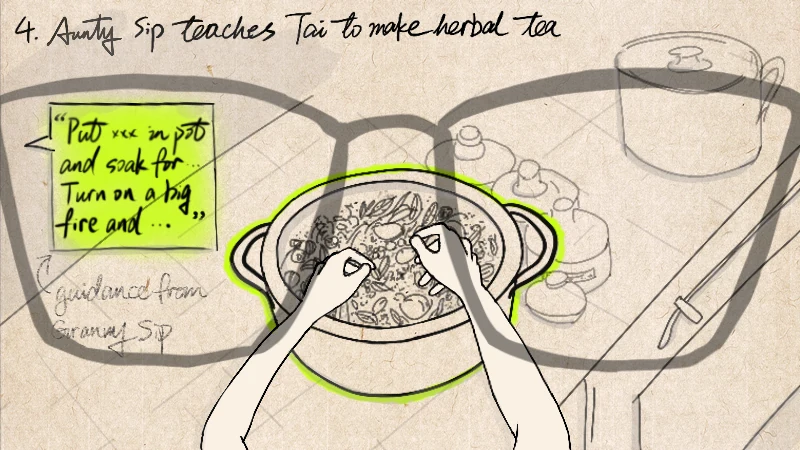
Tai already has a routine. The experience needs to move from a contextual request to sourcing, hands-free preparation, and a thoughtful check-in.
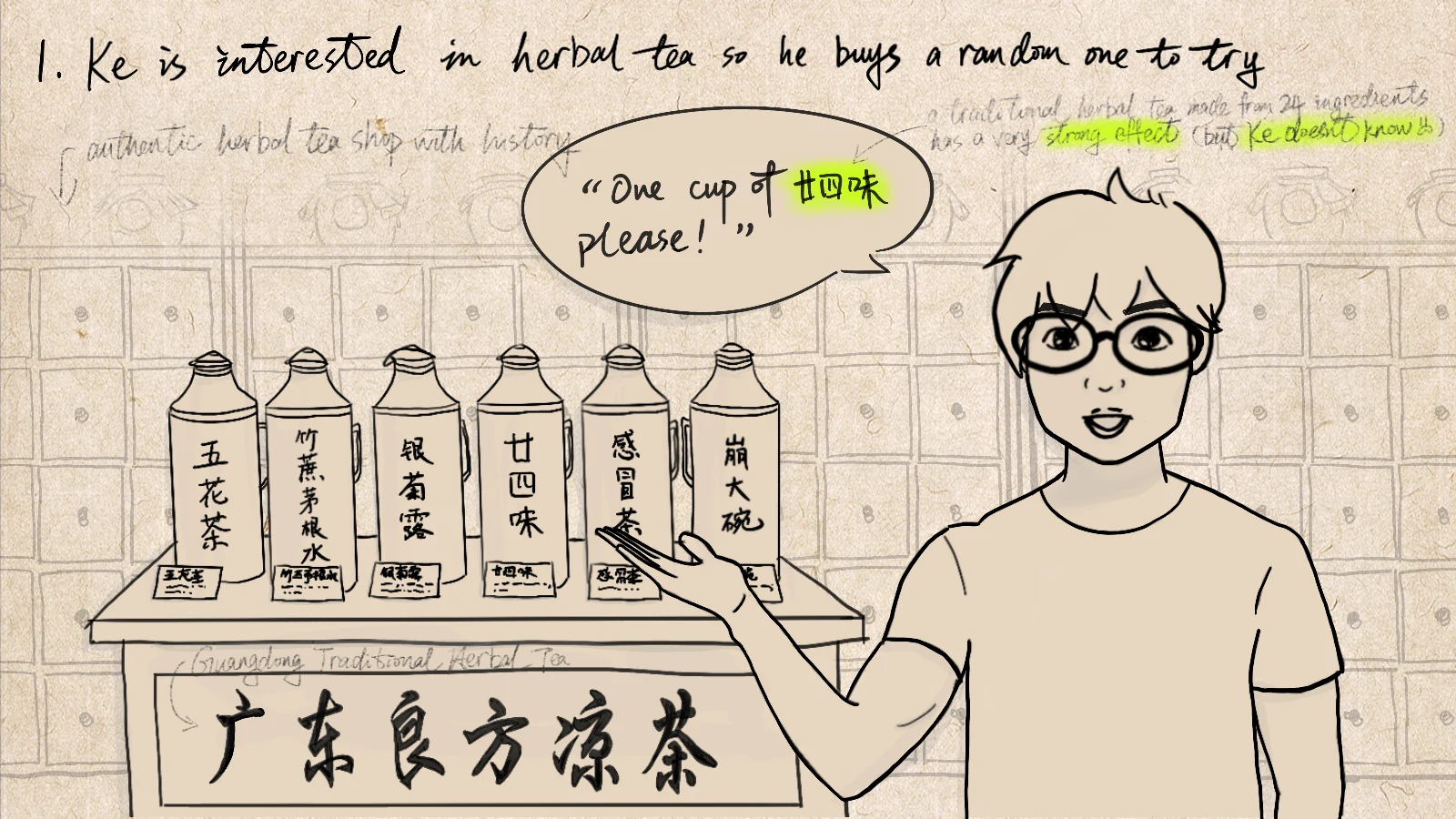
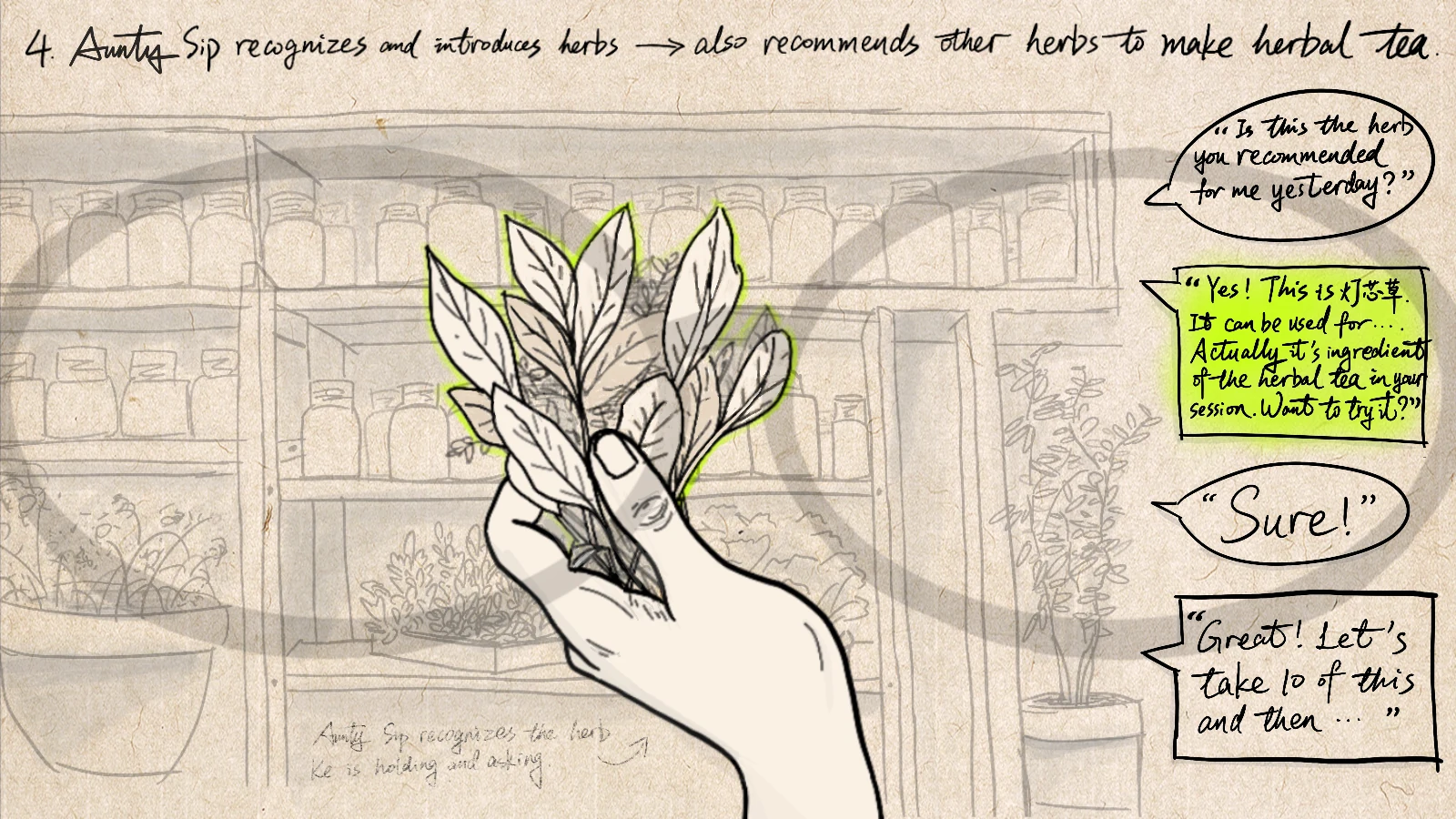
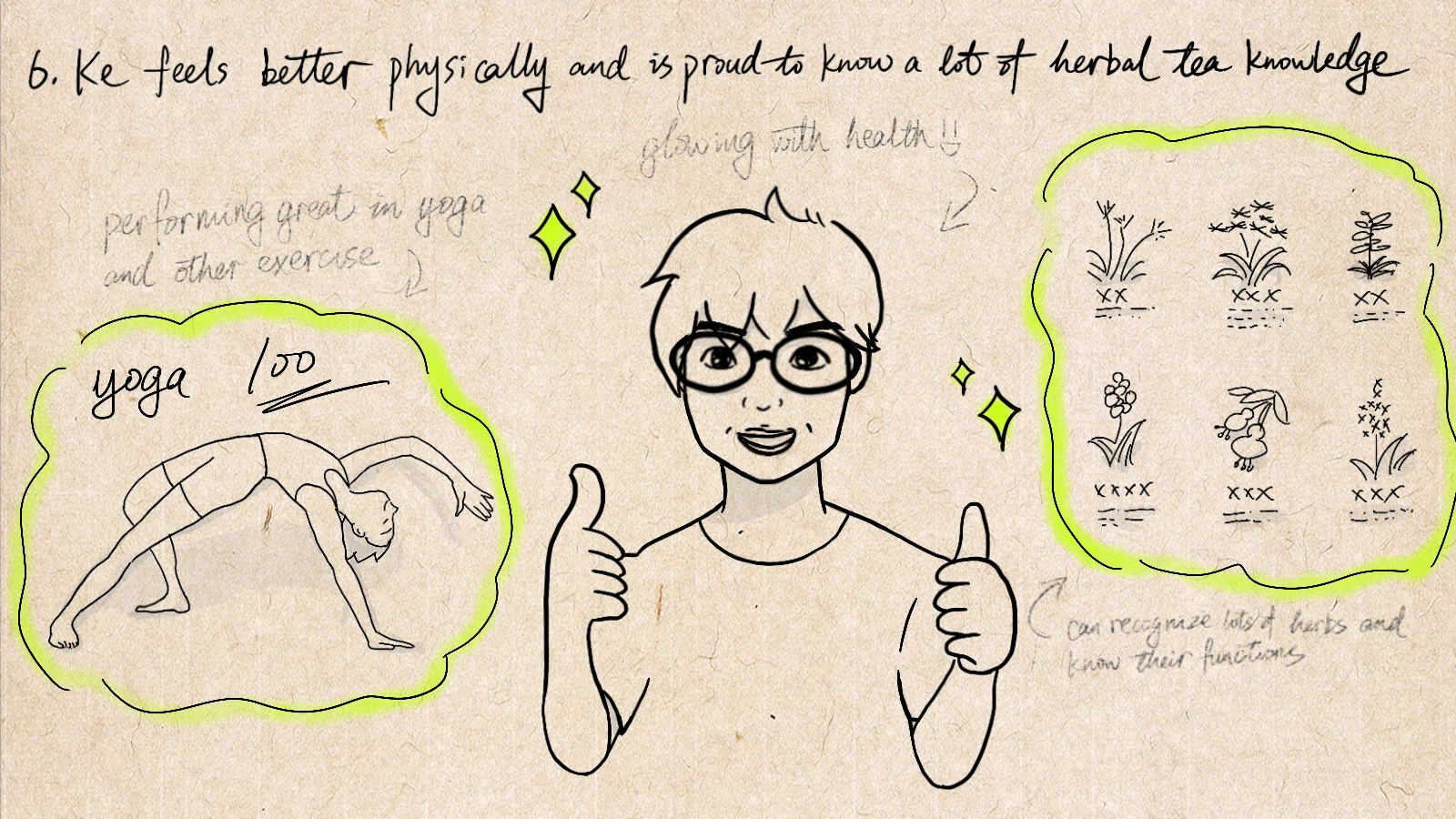
Ke first needs to recognize what they are seeing, understand it in plain language, and learn how to prepare it without being overwhelmed.
Bot persona and visual language
Aunty Sip was written as a caring guide, not an authority that always has the answer. Its visual states make an otherwise invisible voice interaction legible while keeping the view quiet.

A quiet tea swirl shows that Aunty Sip is available.
A breathing water ring makes the microphone state clear.

Tea leaves move outward while the assistant responds.
Two scenario stories
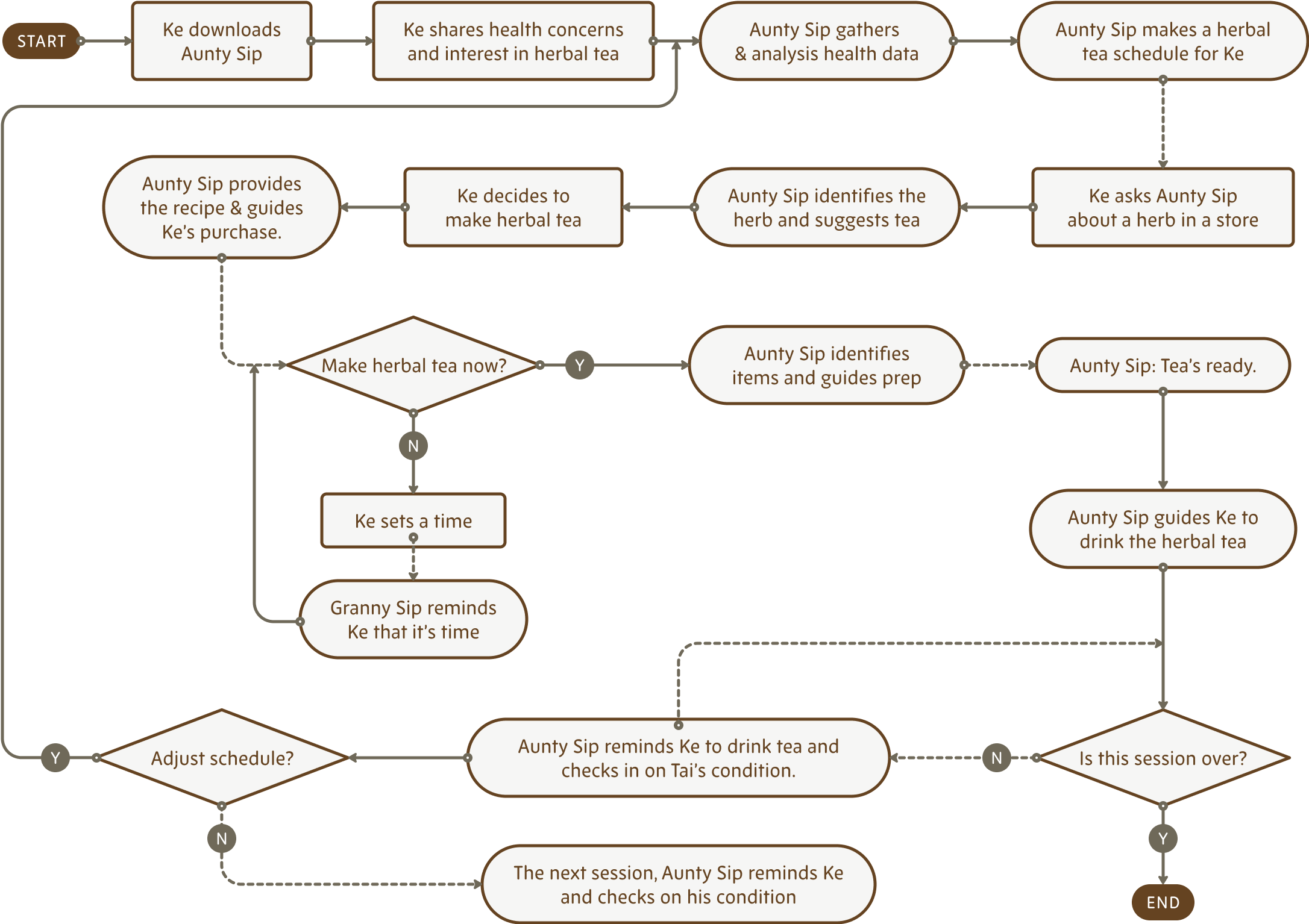
Each scenario connects the dialogue, timing, device handoff, and preparation routine. The videos are user-controlled.
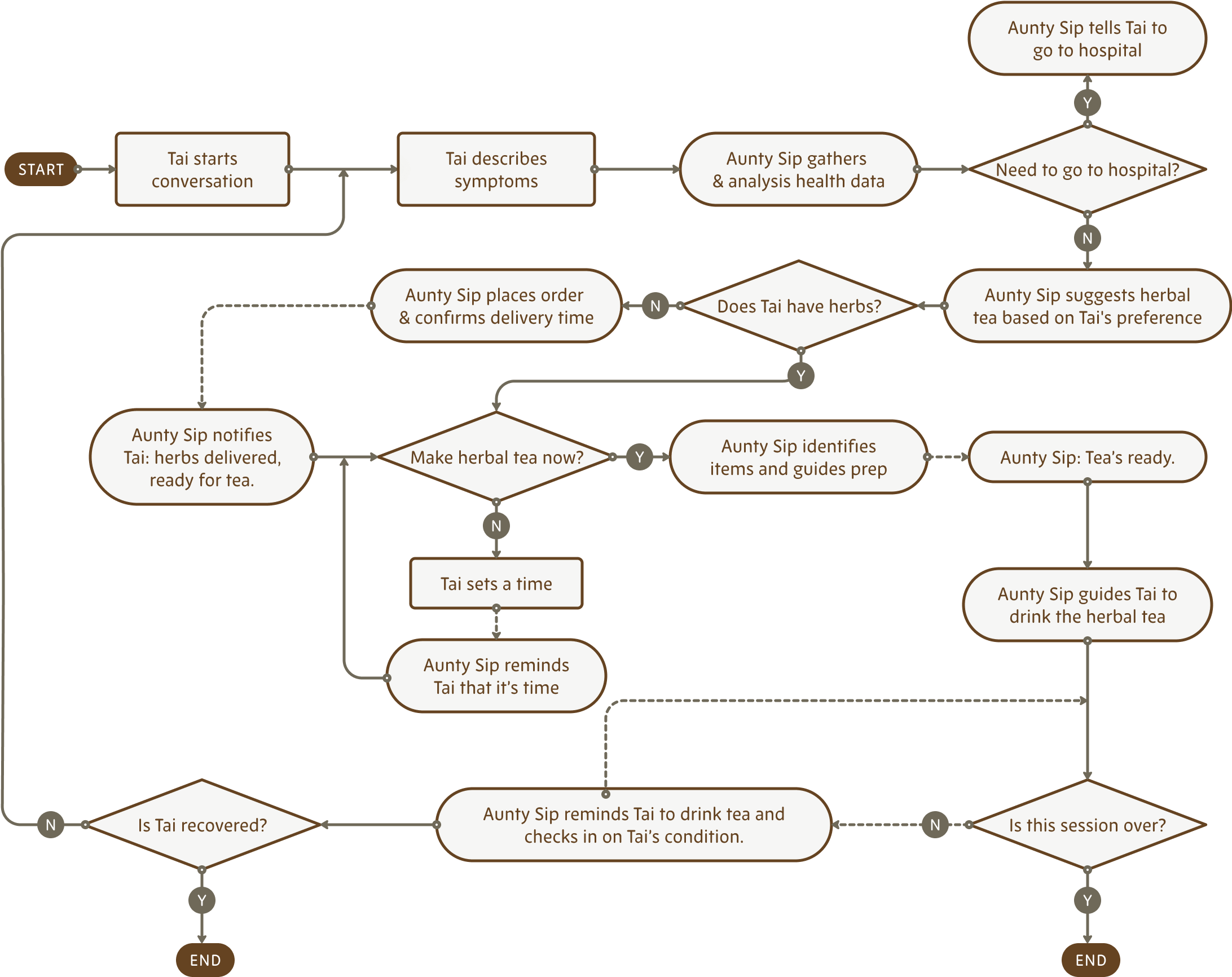
A request becomes a multi-turn conversation, an ingredient handoff, hands-free preparation, and a next-day feedback moment.
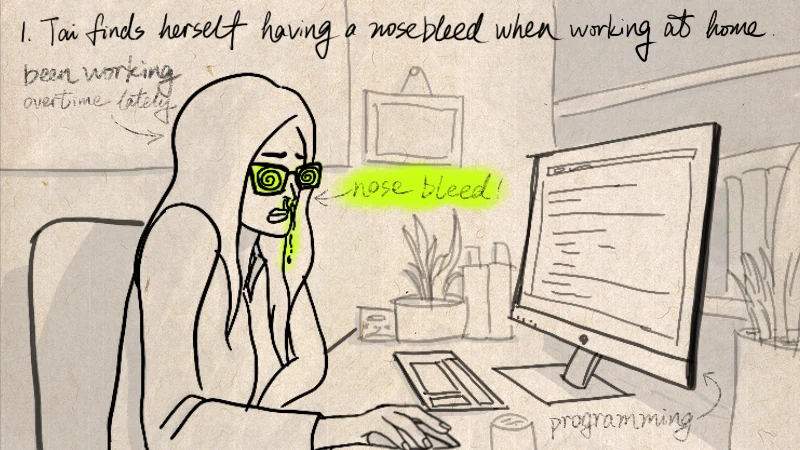
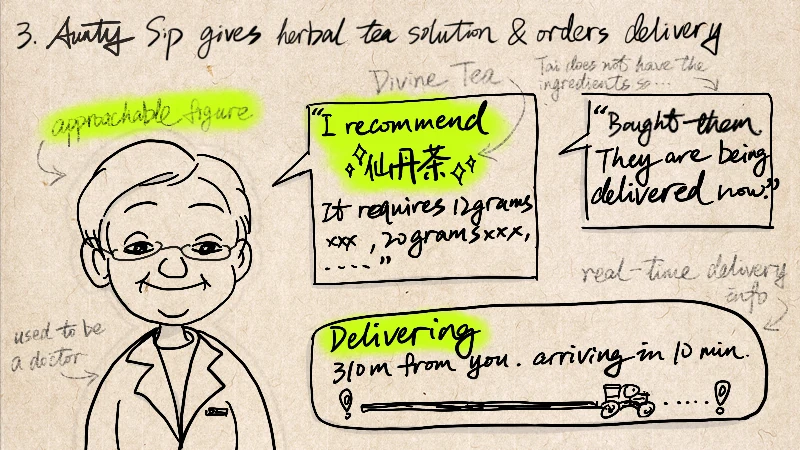
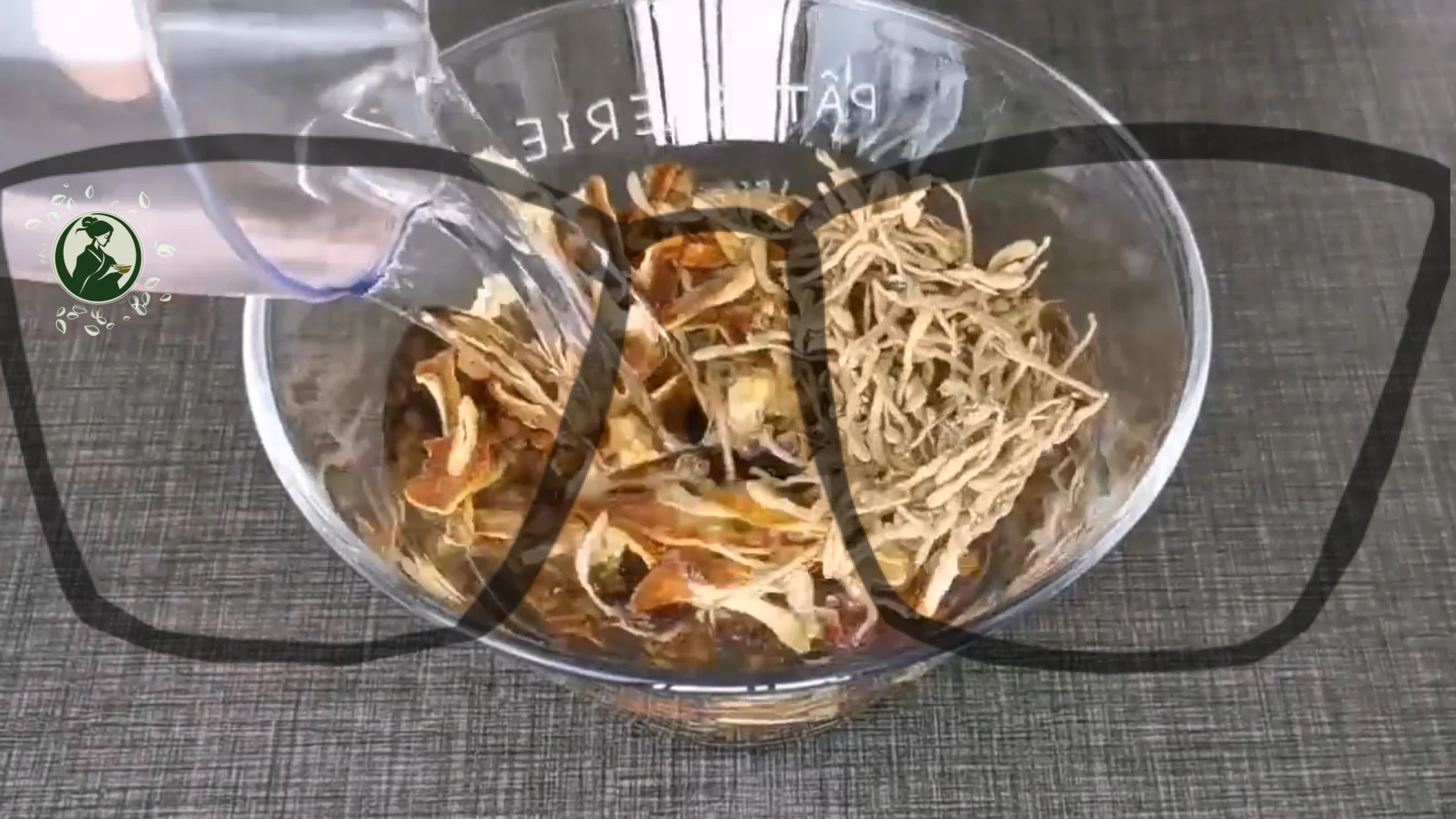
Curiosity in context leads to recognition, a richer phone explanation, and voice-guided preparation.
Cross-device strategy
The glasses keep attention in the world. The phone becomes a deliberate handoff for images, ingredients, sourcing, and longer explanations.
Voice, recognition, short prompts, timers, and step cues appear at the moment of action.

Images, ingredient information, and saved content move to a surface better suited to focused reading.
Conversation architecture
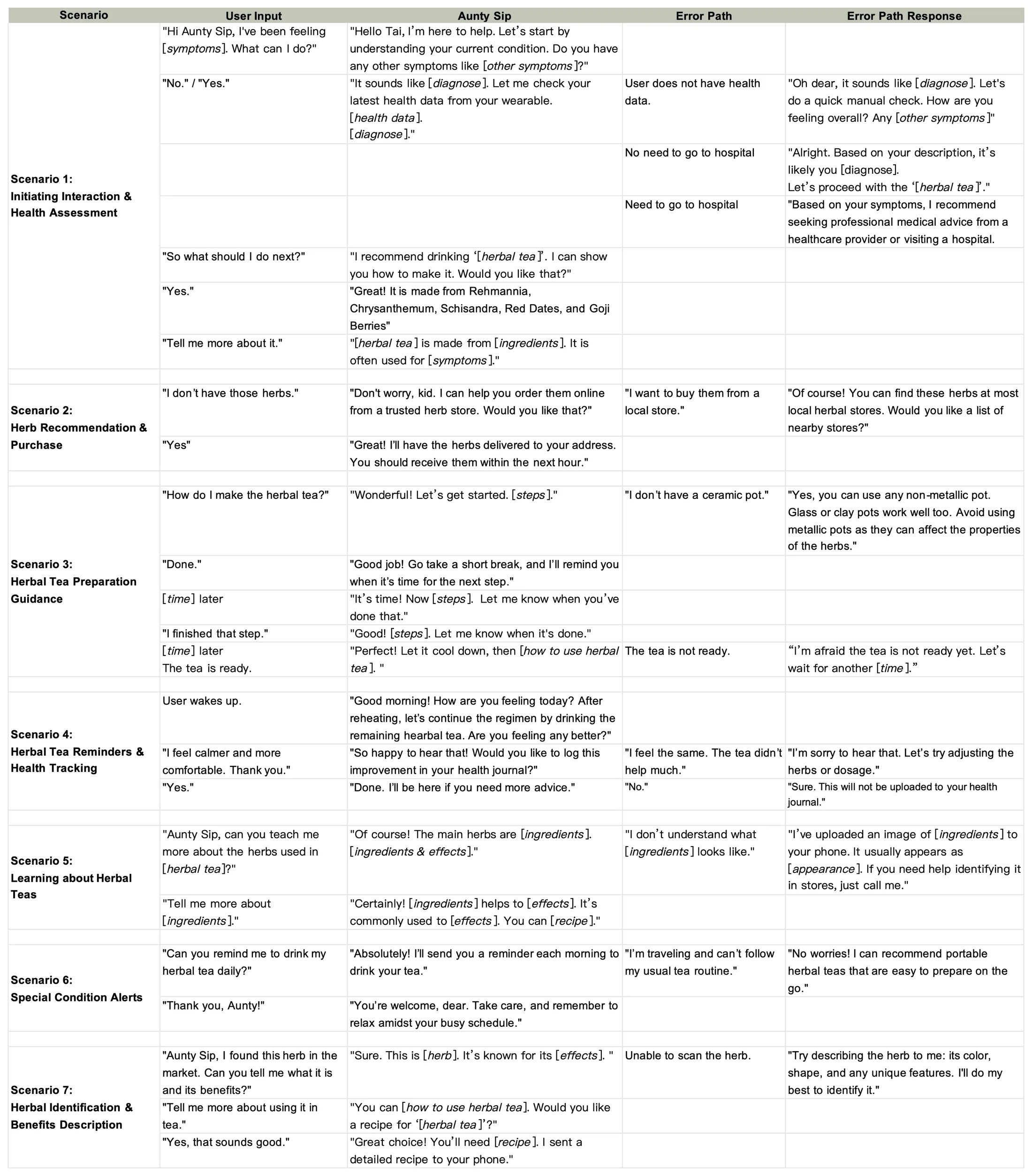
Wearable conversation cannot depend on perfect recognition or on a person following one script. Clarification and recovery are part of the experience, not edge cases.
When information is unavailable, Aunty Sip asks a short, explicit question instead of pretending the system already knows.
If recognition fails, the conversation moves to observable details such as color, shape, and distinctive features.
If ingredients are missing, the experience offers a sourcing path rather than forcing the original routine.
When the explanation needs an image or more detail, the glasses hand the moment to the phone.
Prototype in context
I wrote, designed, edited, and produced both scenario films to make the proposed experience discussable before working hardware existed.
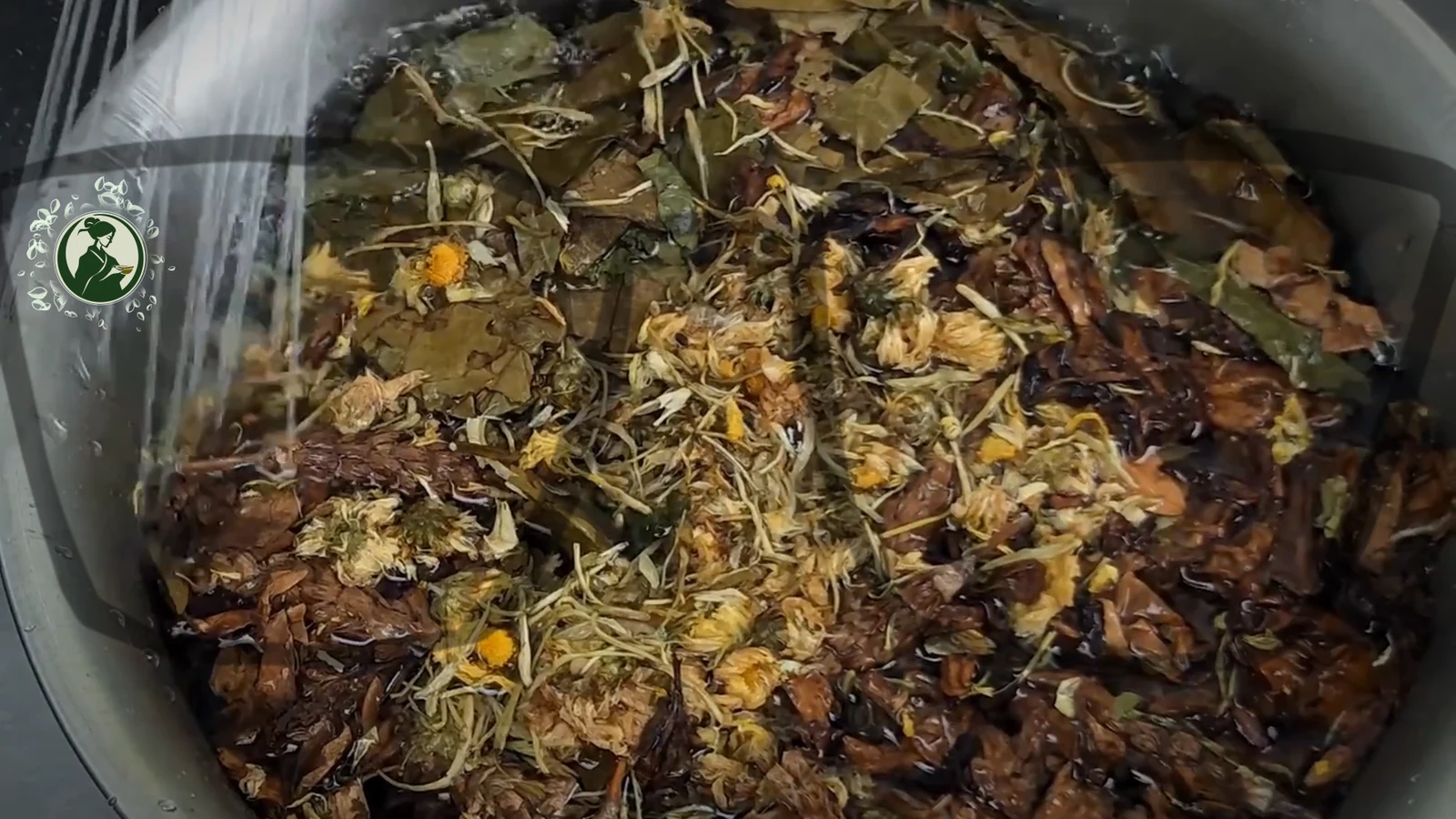
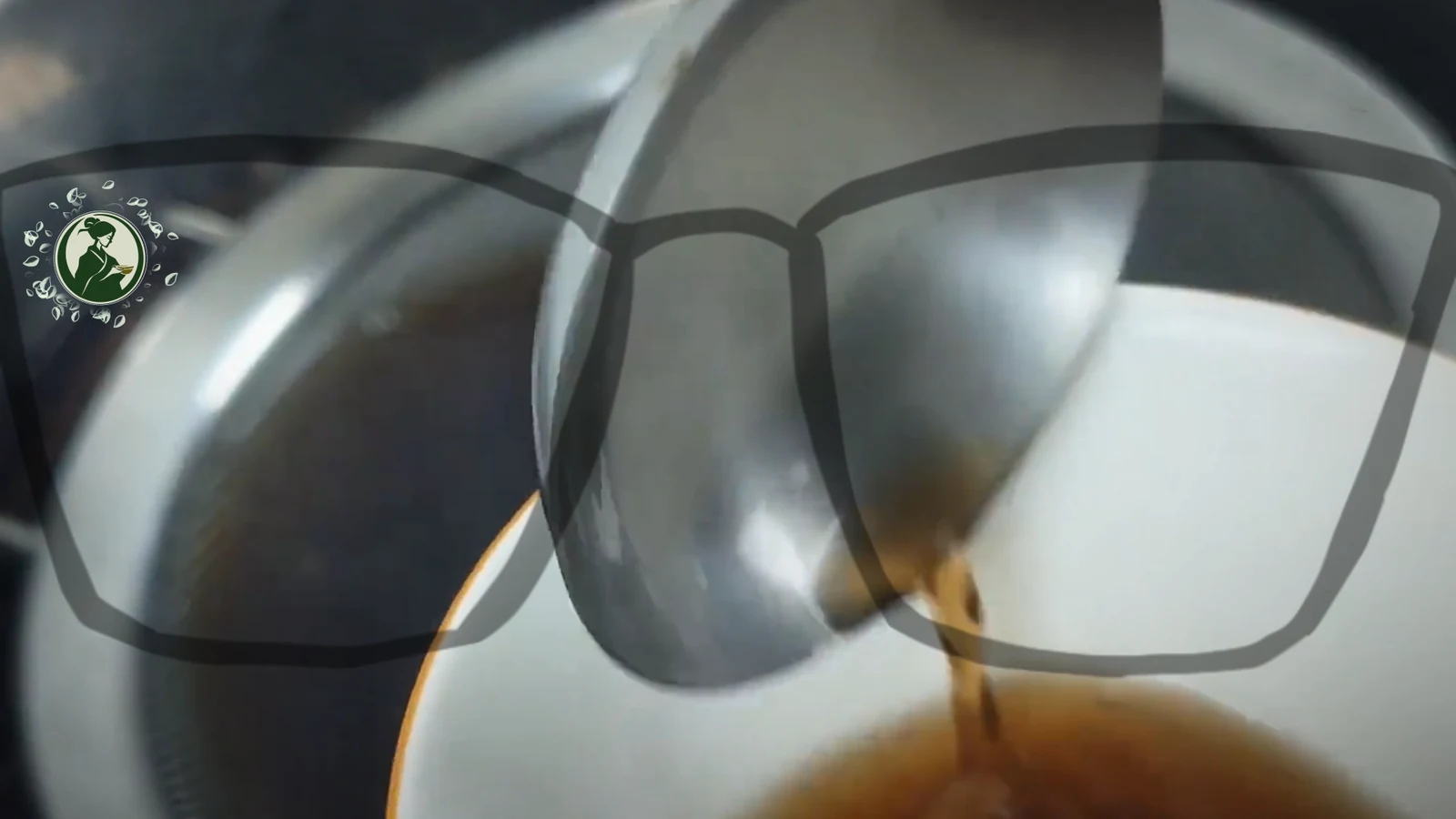
Prototype credit note: the videos include selected footage from the Bilibili video “广东人为啥自讨苦吃 (Why do Cantonese Seek Bitterness?)”; a delivery icon from Iconfont; and journey illustrations created with MidJourney. Concept direction, conversation design, interface, storyboards, editing, and video production are Yazmin Wang’s work.
Reflection and limits
Aunty Sip was not clinically validated, did not diagnose or treat conditions, and did not test live health data or recognition accuracy.
Cross-device product thinking, conversation architecture, scenario design, visual states, interface design, and video prototyping within one system.
The original doctor-like persona risks over-trust. A future version should show uncertainty clearly, separate education from medical advice, and provide an obvious safety escalation path.
Run Wizard-of-Oz sessions, test comprehension and recovery, define consent and privacy, and explore recognition confidence, cultural accuracy, and hardware feasibility.