Click, tap and swipe through the complete experience.
Focus
Dining · Post-save retrieval
My contribution
Product framing, interaction flow, visual direction & iterative refinement
AI-assisted implementation and presentation production. Not an official TikTok feature.
Current intentPast discovery
01 · The opportunity
Saved for later. Lost when later arrives.
“That ramen looks good. Save it.”Discovery
→
“Where was that place I wanted to try?”Two months later · An illustrative scenario
Saving captures interest, but retrieving the right place later can depend on remembering a restaurant name, creator or collection.
This concept starts with a design hypothesis: the original video may be a stronger memory cue than the details someone can recall. This is not a finding from user interviews.
02 · The mechanism
Don’t make people organize better. Make TikTok remember better.
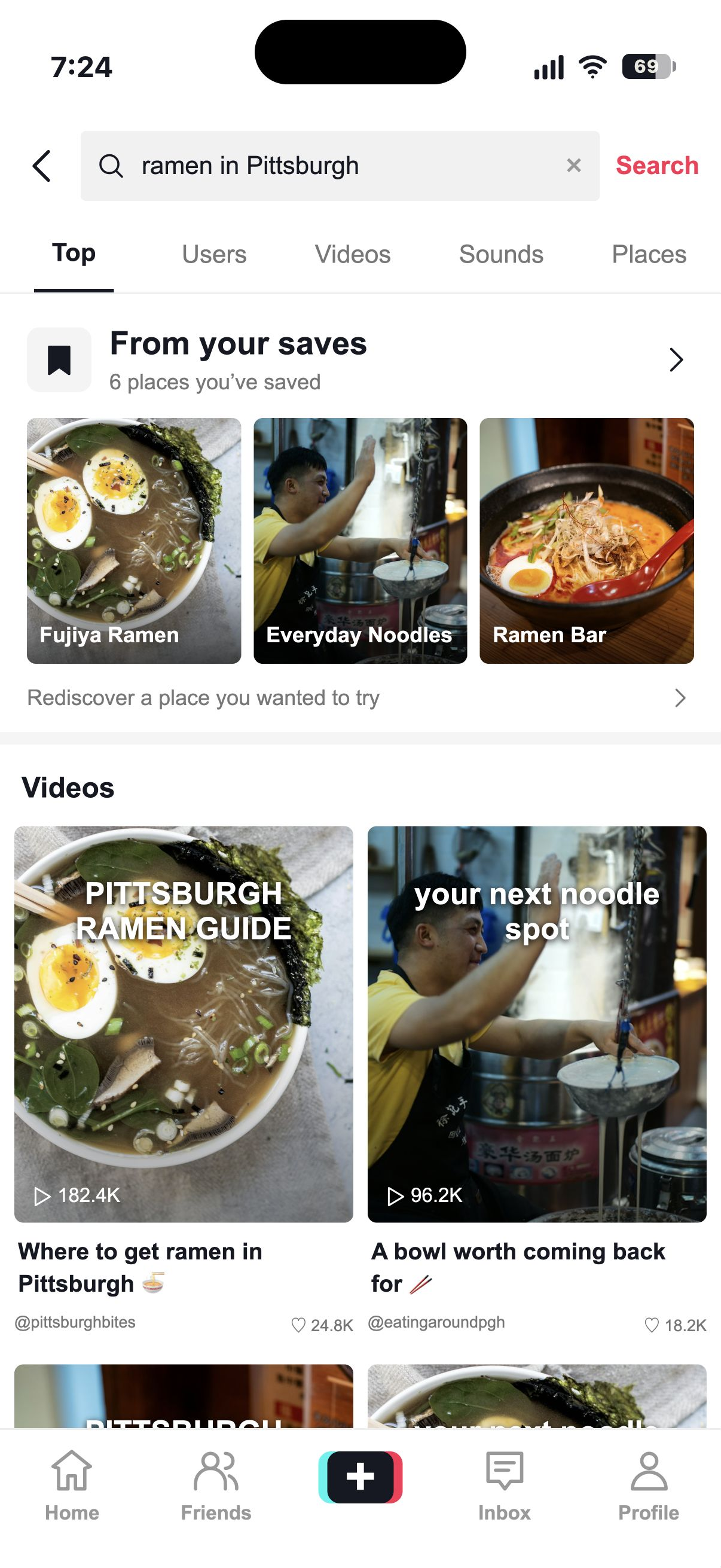
Current search intent brings relevant past saves back into view—even across different collections.
01 / Retrieve
Meet the need where it appears.
A search for “ramen in Pittsburgh” creates the context. From your saves sits inside the existing search results, alongside normal discovery.
Rather than ask people to file everything correctly in advance, the concept retrieves across collections when the need becomes specific.
02 / Recognize
The video is the memory cue.
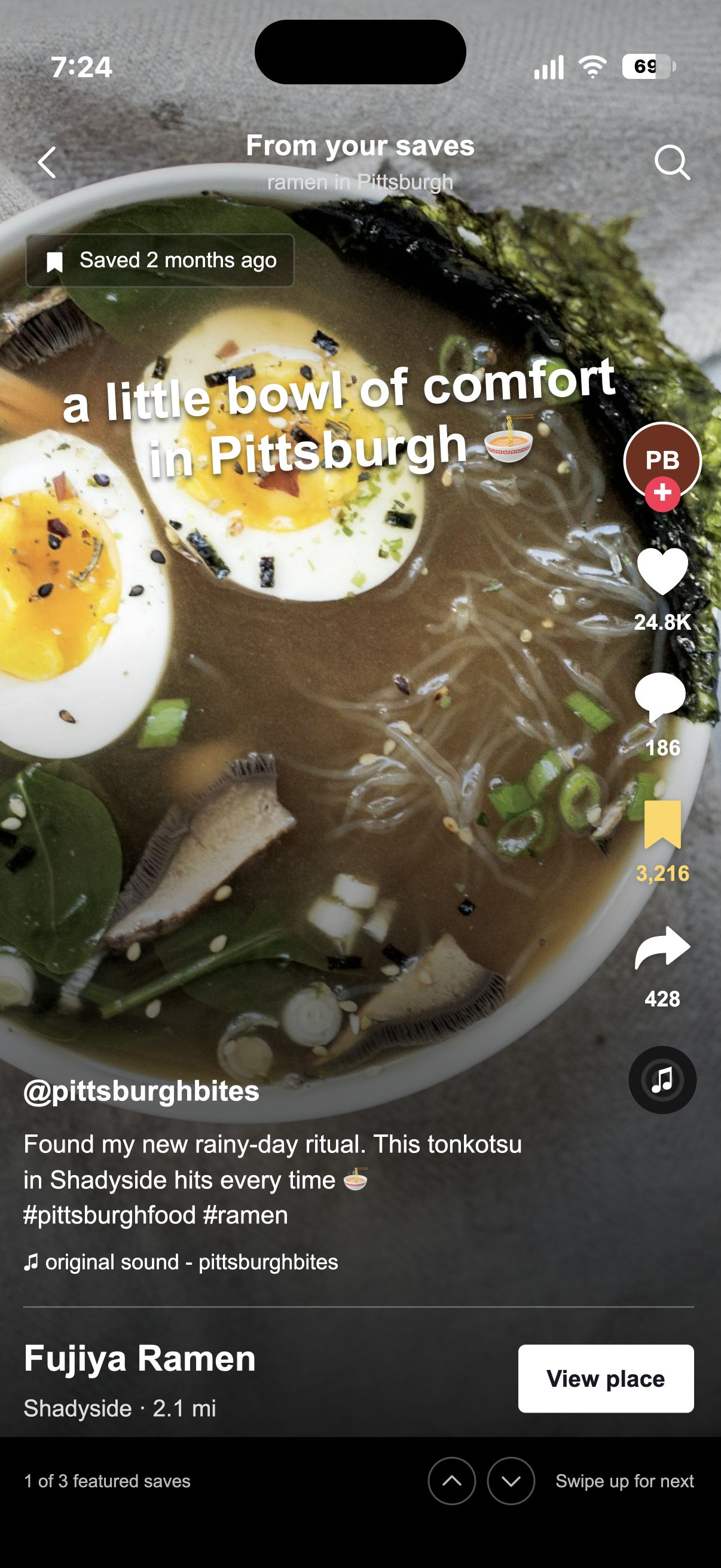
People browse the original saved TikToks vertically, with the creator, place and saved timing still visible. The Fujiya Ramen content saved at the beginning is the same content resurfaced later.
I kept TikTok’s video-first browsing model instead of turning retrieval into a restaurant database or adding speculative explanations of why someone saved a video.
03 / Act
A clear next step, not another planning tool.
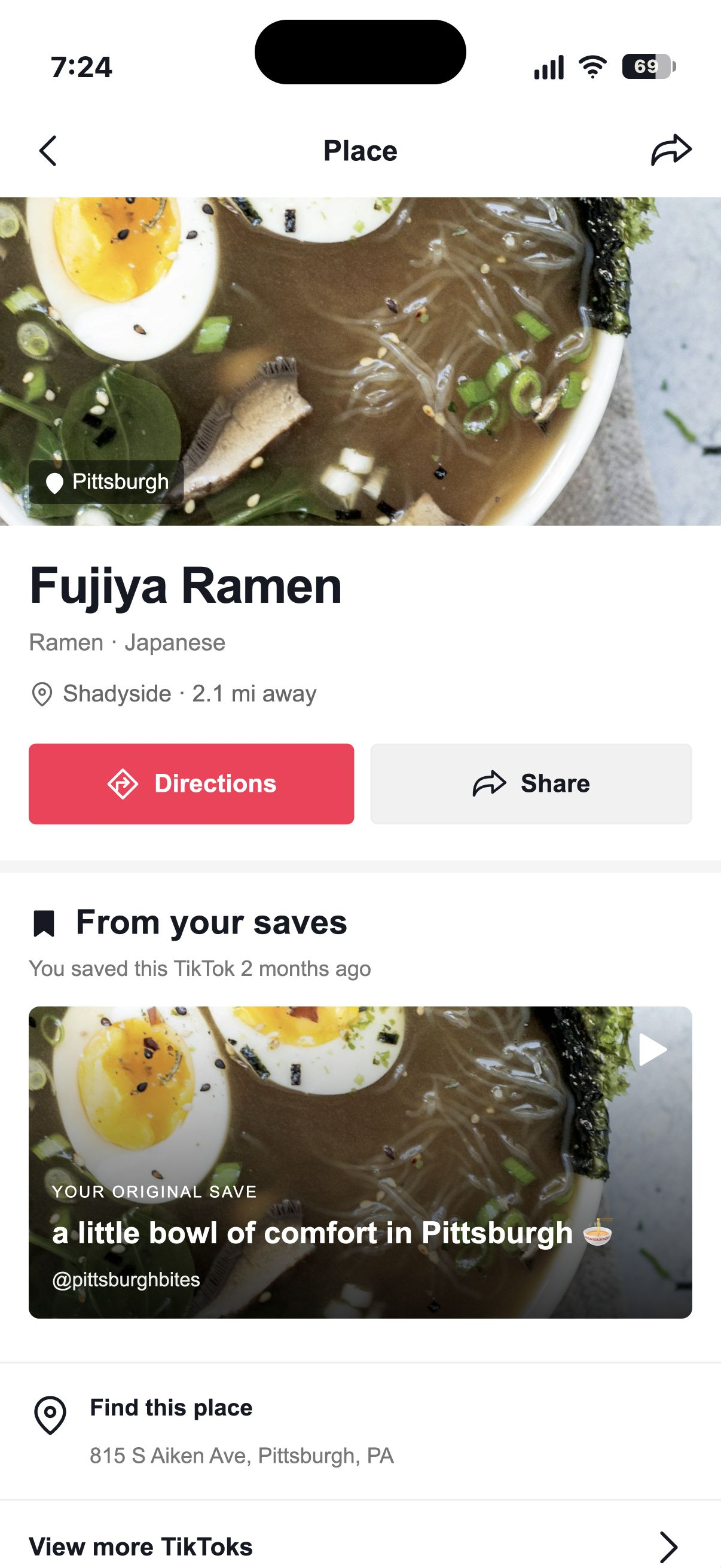
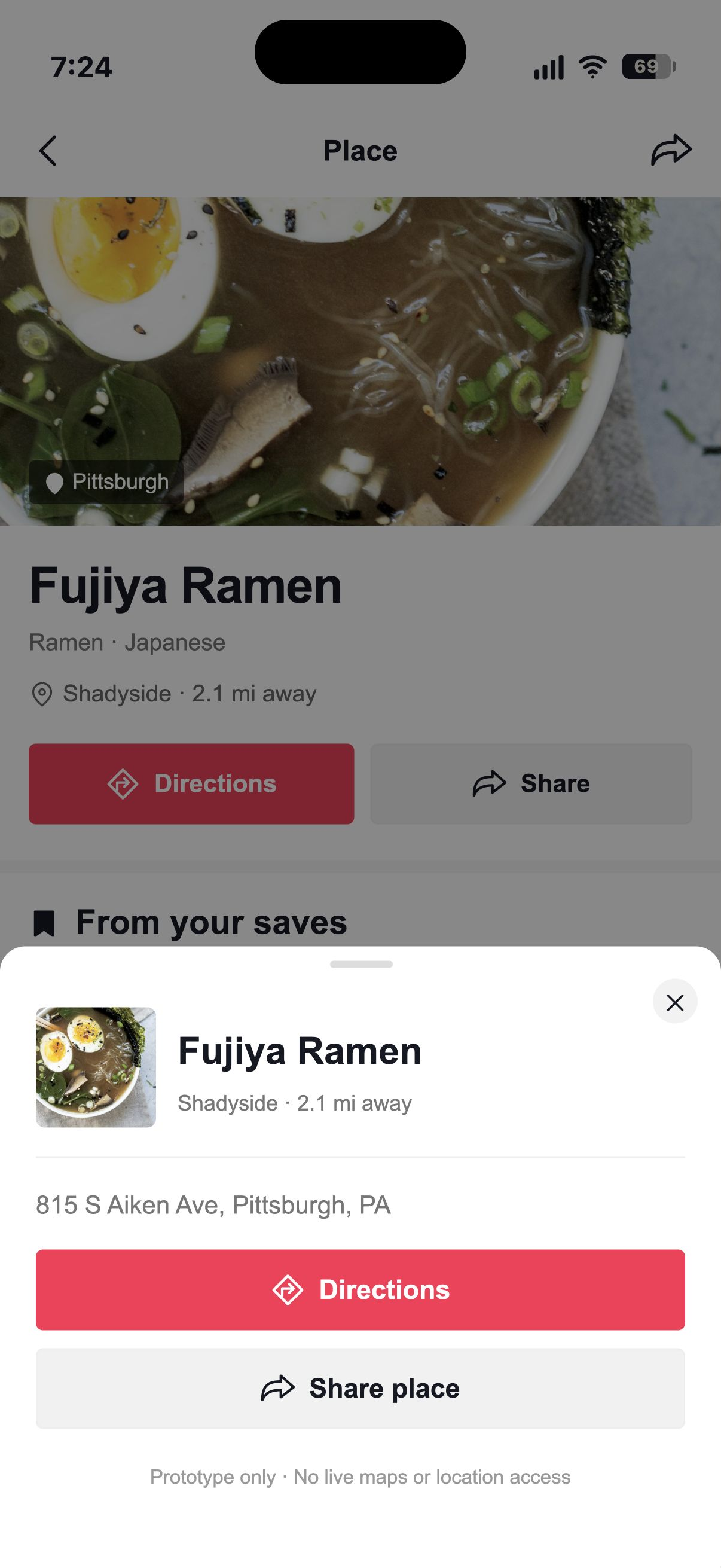
View place connects the restaurant to the original save. Directions and Share provide lightweight next actions without introducing ratings-heavy comparisons or a separate itinerary.
The navigation handoff is simulated in this prototype.
Click, tap and swipe through the complete experience.
Designed to explain itself
A seven-step demo guide uses subtle pulse hints and a browsing cue. It invites visitors to browse before pointing them toward View place and Directions. Hints can be hidden and the experience replayed.
A guide, not a product feature
The time jump and walkthrough are presentation aids. The product proposal is the search-led retrieval mechanism, not the guide itself.
04 · What I would validate next
Does recognition make retrieval easier?
Find the right place
Compare task completion and time to the correct place against a Favorites-based journey. Can people recover a saved restaurant without remembering its name?
Trust what comes back
Test perceived relevance and whether original-video cues help recognition. Explore how the experience should behave when there are no relevant saves.