Finding
Mobile was the main consideration channel.
Customers were comfortable researching, configuring, and even ordering an EV on their phones.
Design implicationKeep the core journey usable on mobile.
Ford Motor China · Dec 2022 to Jul 2023
Final hi-fi prototype
Lincoln was exploring its first electric vehicle in China without a predetermined feature list or an established EV service model.
Design mandateCreate one connected relationship from discovery to ownership.
Core tensionReconcile mobile-first EV expectations with Lincoln’s premium service, brand, and operating reality.
The research team interviewed ten participants. I used the findings to set experience priorities and develop service concepts.
Customers were comfortable researching, configuring, and even ordering an EV on their phones.
A new electric vehicle introduced questions that specifications alone could not answer.
Charging, maintenance, membership, and support needed to feel continuous with purchase.
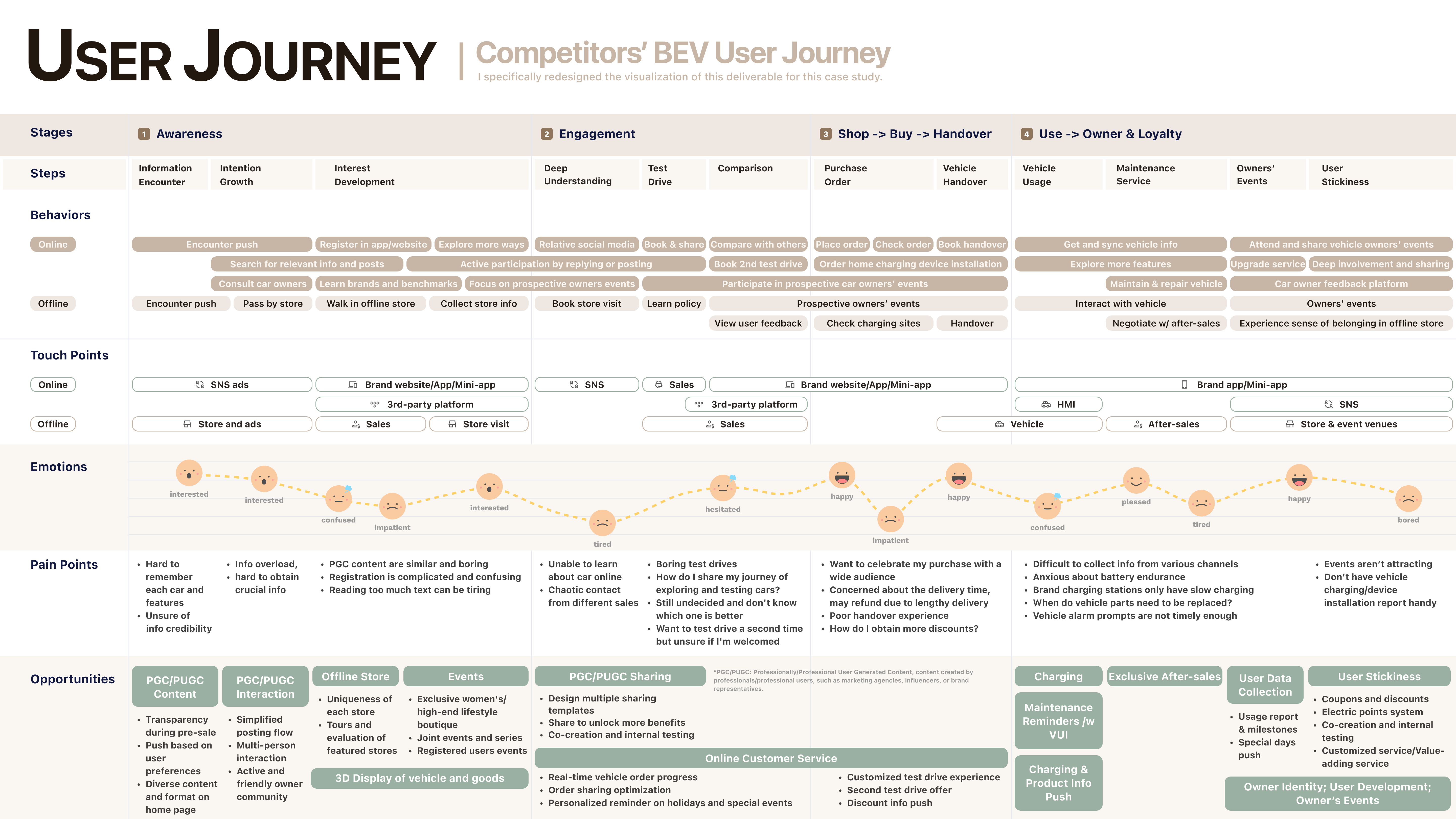
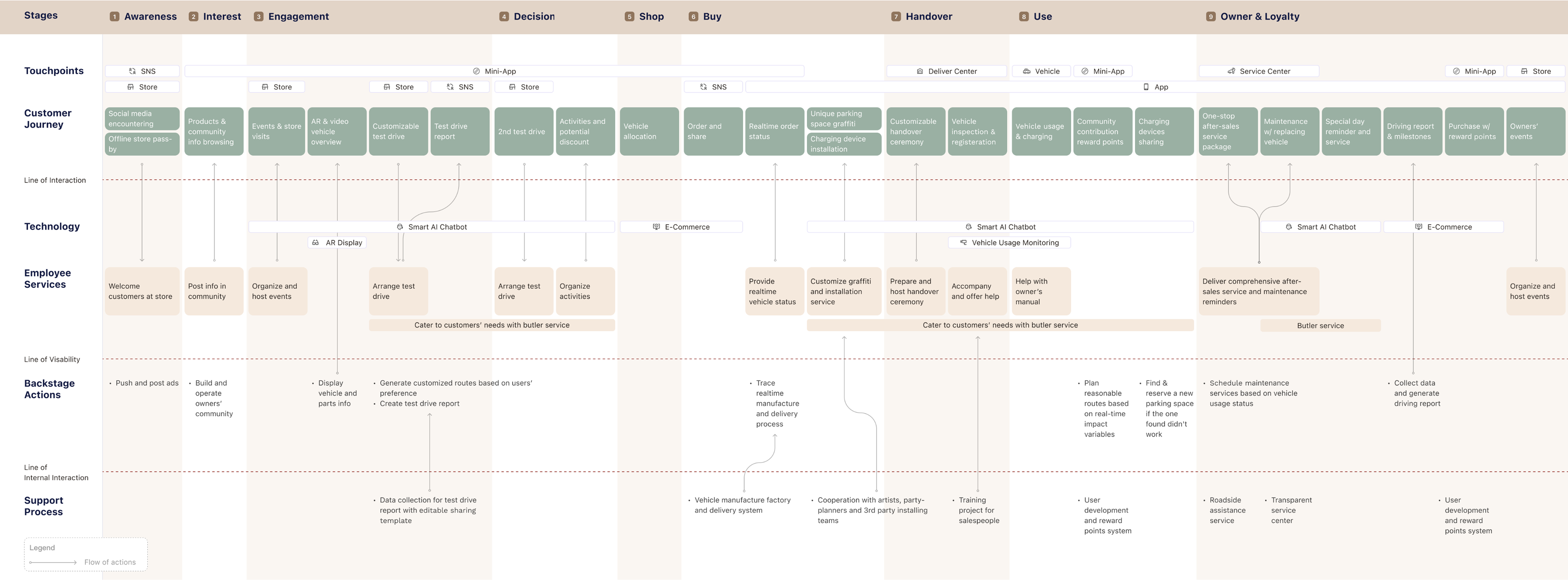
The proposed model connected customer intent and channels across discovery, decision, and ownership. I co-created the journey and service blueprint with cross-functional partners.
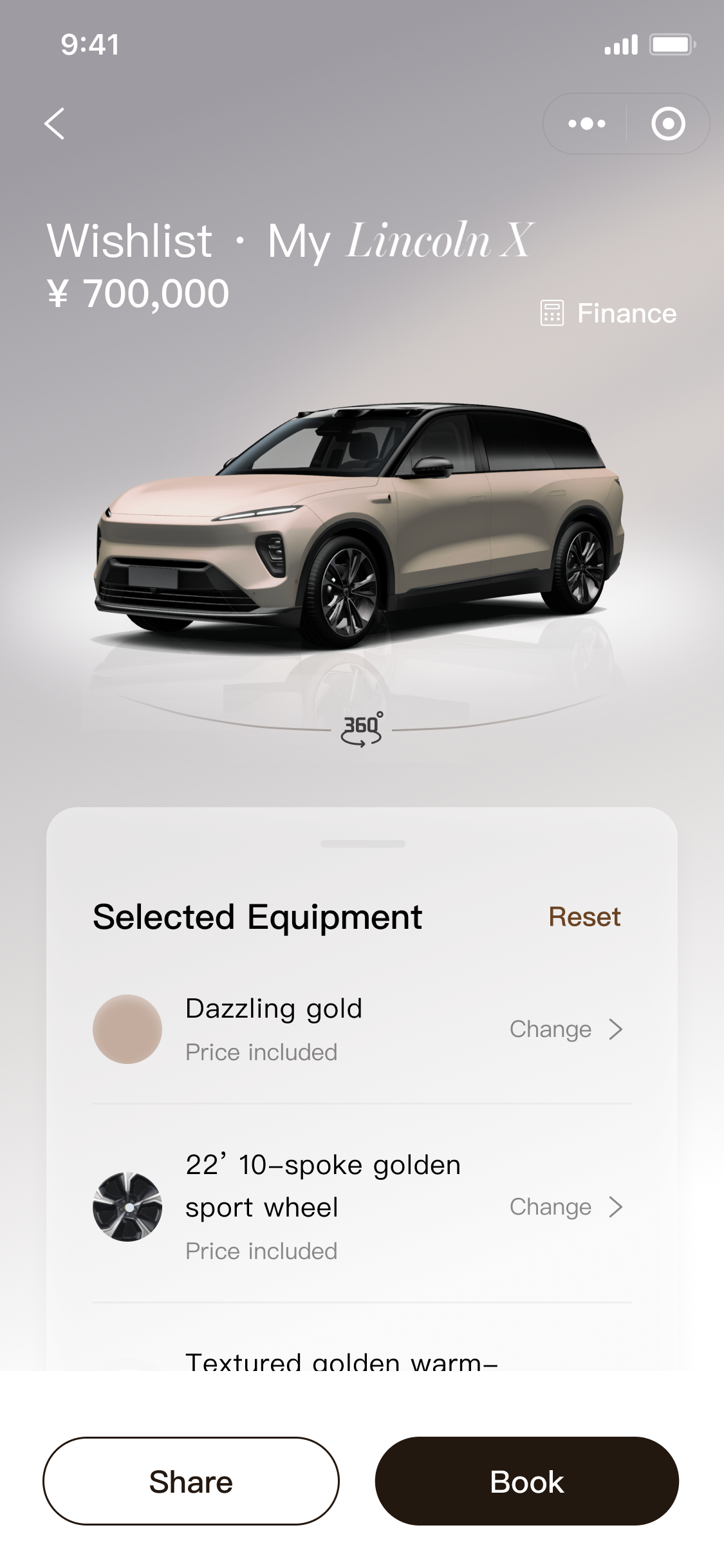
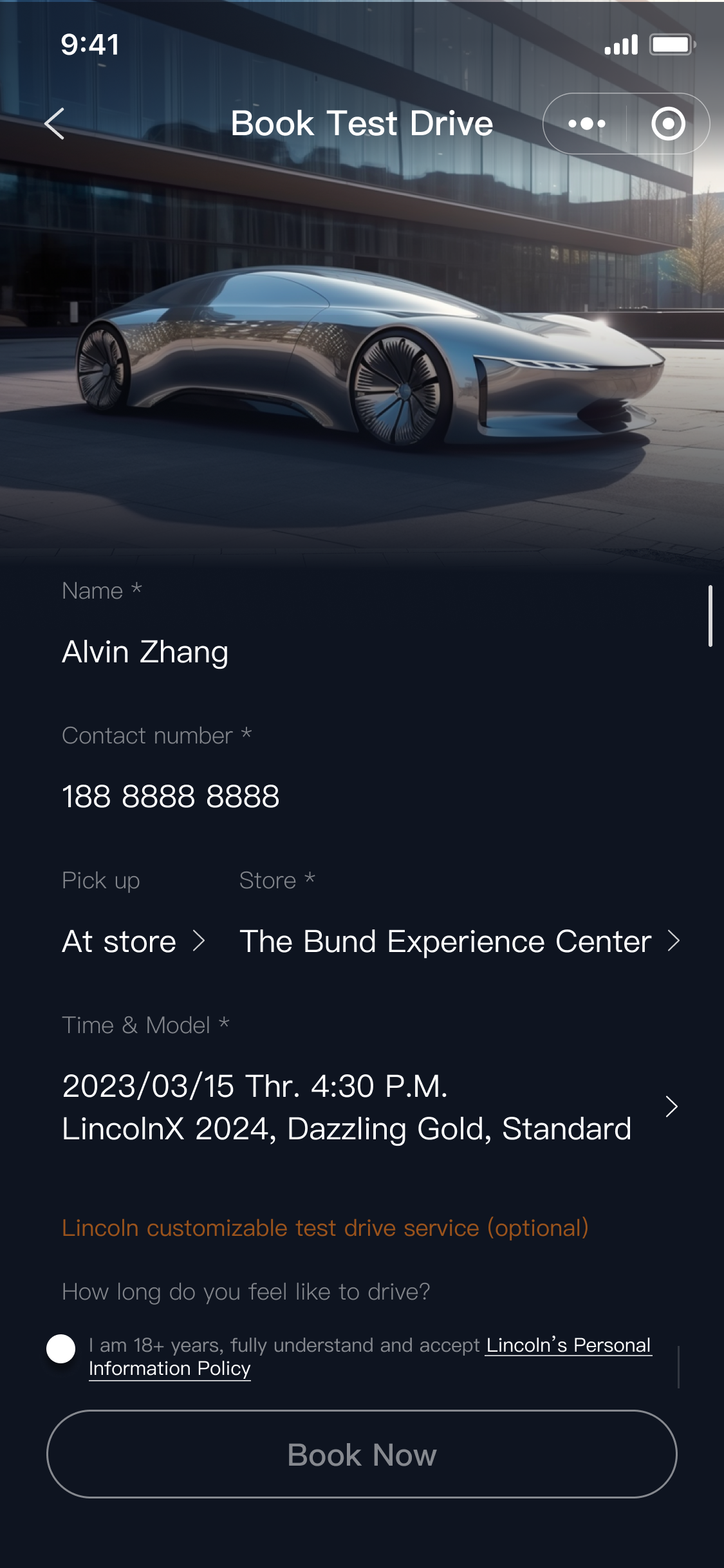
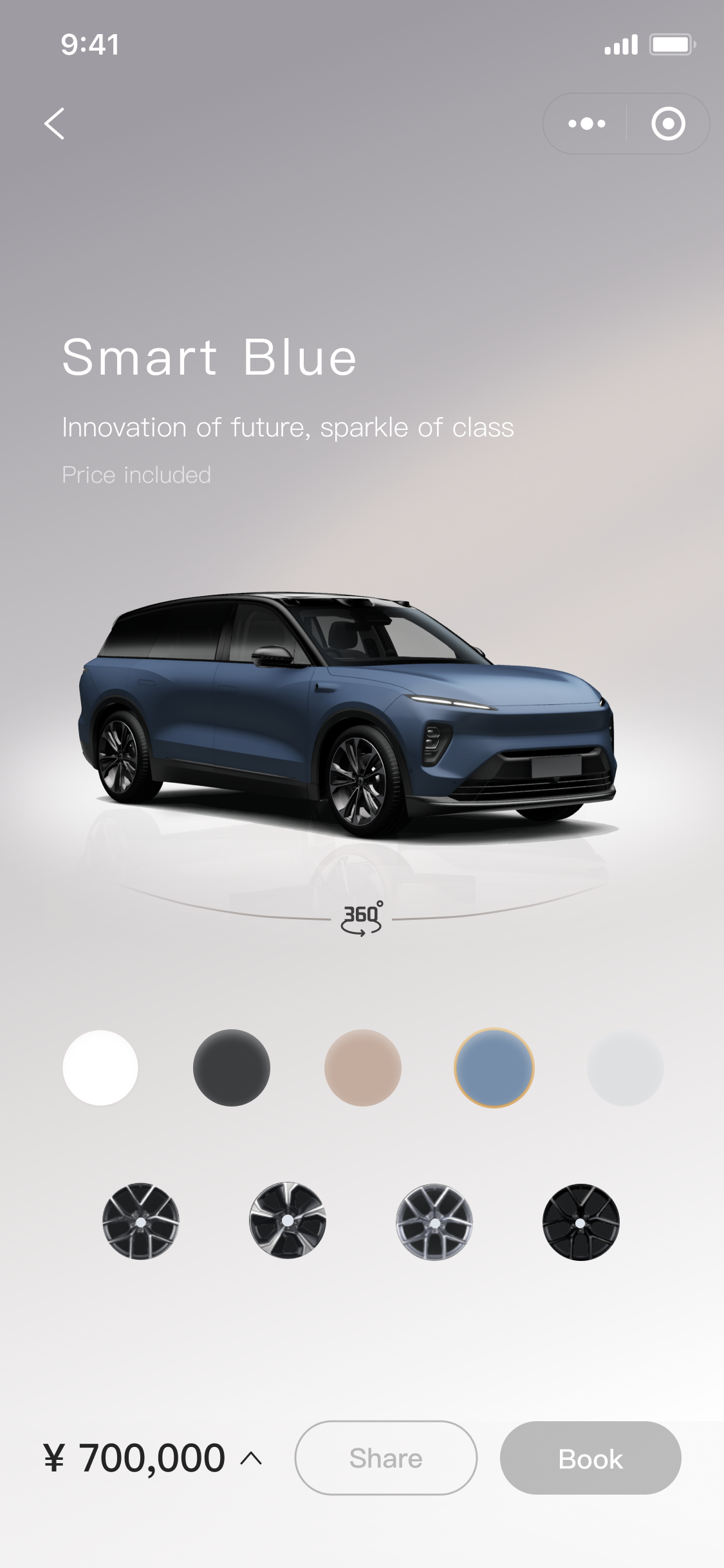
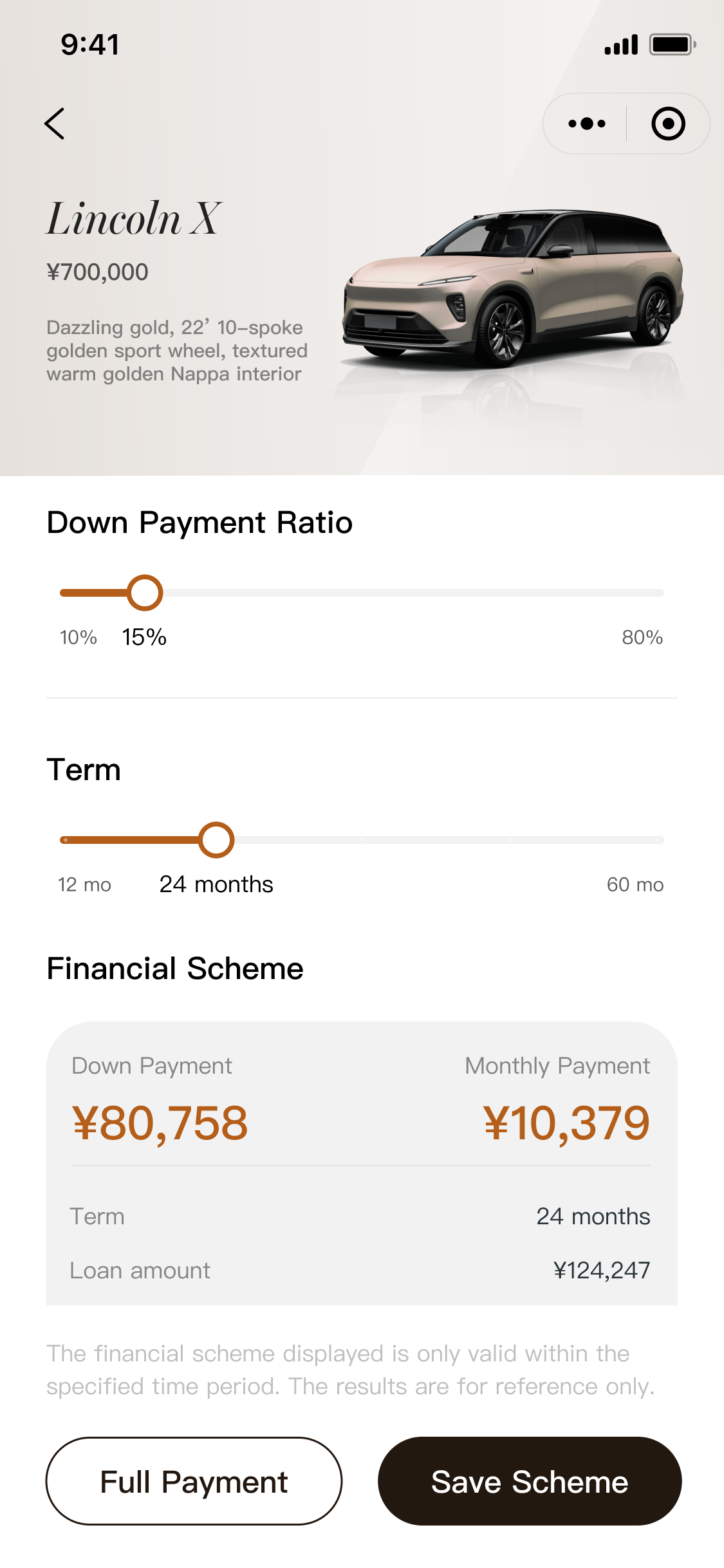
Every screen below is from the final Hi-Fi Prototype. Each flow plays automatically; pause, use the arrows, or select a named step at any time.
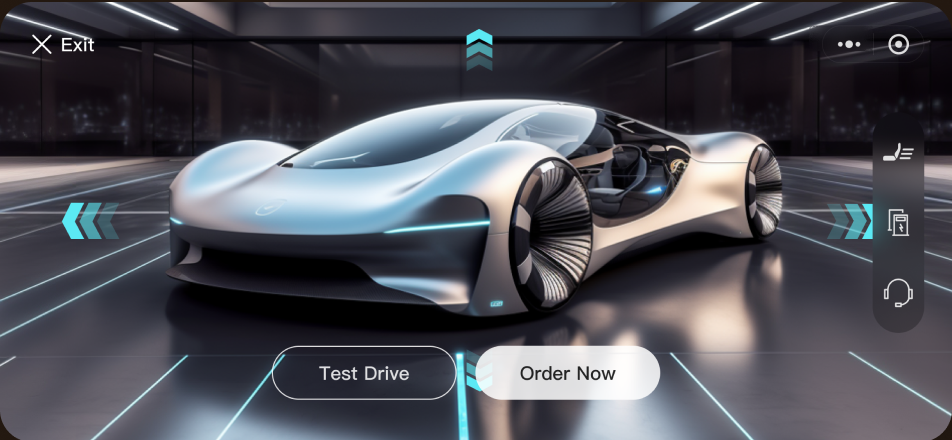
The final mini-program flow connected the Lincoln home page, service support, immersive vehicle exploration, a vehicle manual, and use scenarios.
Select any screen to inspect the final flow.Explore the exterior in an immersive vehicle view before committing.
The final flow moves from booking details and a combined time-and-model selector to a customized route, agreement, confirmation, and post-drive feedback.
Select any screen to inspect the final flow.Start with personal details, pickup preference, and a service-center choice.
The final purchase flow carries the configured vehicle through exterior and interior choices, an editable wishlist, finance, deposit, and order confirmation.
Select any screen to inspect the final flow.Choose color and wheel details while keeping the vehicle visible.
Four details from the final prototype show how the experience reduced interpretation, kept vehicle context visible, and made each next step more explicit.
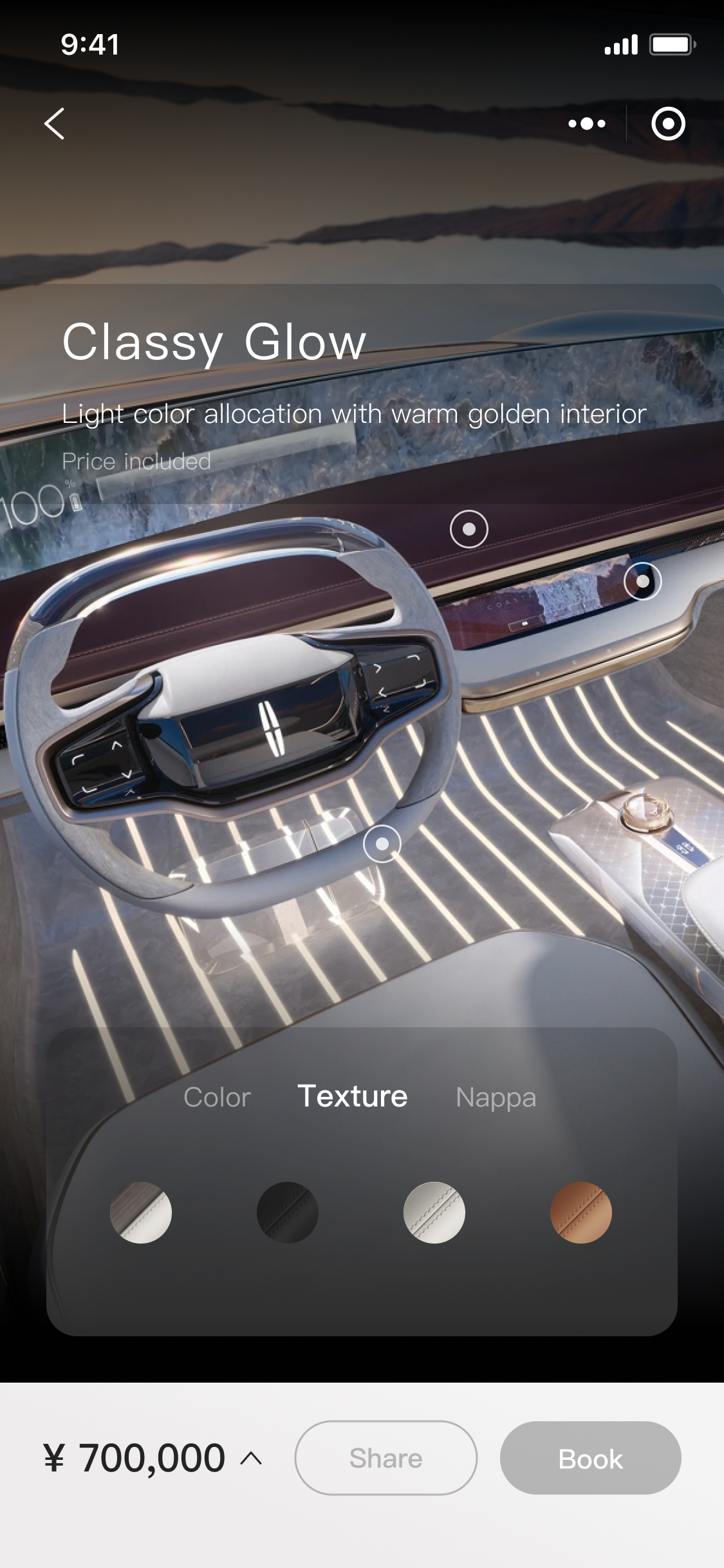
Exterior and interior choices stayed attached to the same vehicle. Color, wheel, material, and texture changes returned visual feedback in context instead of asking people to remember previous selections.
Down-payment ratio and term became sliders tied to visible payment amounts, helping people compare a finance decision without leaving the configured vehicle behind.
Adjust → compare → decideThe post-drive prompt signals a one-minute ask before opening feedback, reducing uncertainty at the moment the journey asks for more effort.
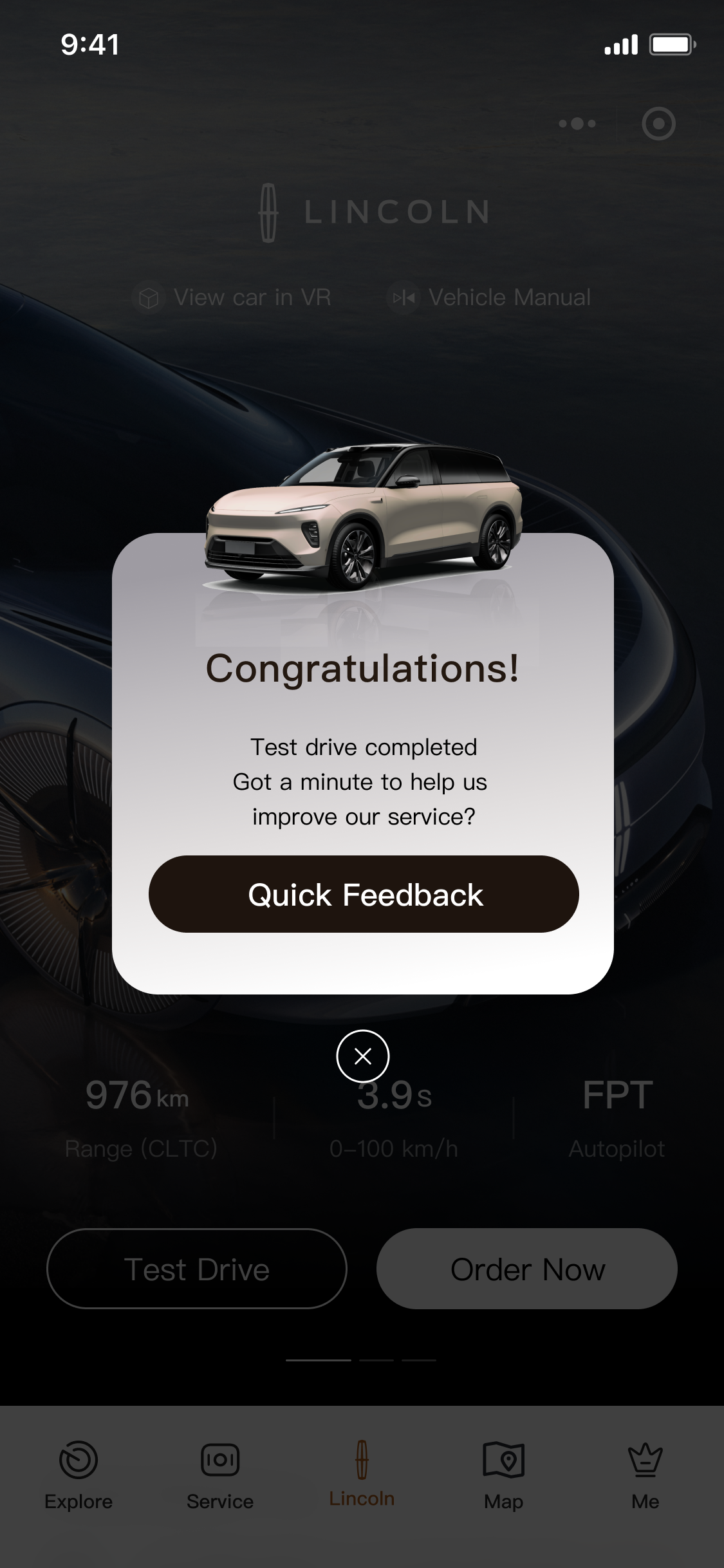 One minute, stated up front
I recommended clear text labels for icon-only controls so people could recognize an action without learning a new symbol set. The UI direction adopted the labels.
⌁☼⚡
⌁Air flow☼Lighting⚡Charge
The program stopped before development, so these reflections speak to the quality of the work and collaboration. They are not launch metrics.
“The project exemplifies high quality and reflects Lincoln’s commitment to exceptional customer experiences.”
General Manager
“The product-thinking mindset and user-centered approach of the UX/UI team were fundamental to the project’s success.”
Product Owner
“Working with YueZhi was seamless thanks to her collaborative spirit and outstanding communication skills.”
User Researcher
Lincoln reconsidered its EV strategy, and the program ended before development. The work did not launch, so there are no product metrics.
A concept service model connecting the proposed customer journey with channels and operational dependencies.
I learned to treat the interface as the visible edge of a larger service: every screen decision depends on what retail, delivery, support, and vehicle teams can sustain.